
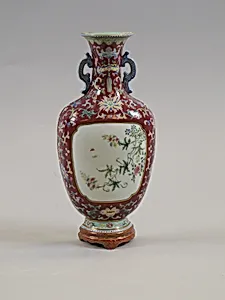
Wall Vase
Unknown Artist
18th–19th century
Medium
Porcelain with colored enamels
Dimensions
H. 8 in. (20.3 cm)
Classification
Ceramics
Culture & Period
China · Qing dynasty (1644–1911)
Department
Asian Art
Museum
Metropolitan Museum of Art, New York, NY
Credit
Purchase by subscription, 1879
Accession Number
79.2.815
Rights
Public Domain
Tags
Art Historical Context
This delicate wall vase, crafted in China during the Qing dynasty (4–1911), the era's mastery of porcelain production. Standing at 8 inches (20.3 cm) tall, it features a slender form designed to be mounted on a wall, likely to hold and display fresh flowers or branches. Adorned with vibrant colored enamels, the vase showcases intricate floral and plant motifs—hallmarks of Qing decorative arts—that bring nature's beauty indoors in an elegant, space-saving way. Porcelain from this period, often produced at imperial kilns like those in Jingdezhen, represented the pinnacle of ceramic technology. The use of colored enamels, fired overglaze at lower temperatures, allowed artisans to achieve rich, layered hues in pinks, greens, and blues that wouldn't fade with use. These techniques highlighted China's export prowess, as such wares graced homes, temples, and even European collections, symbolizing refinement and prosperity. Acquired by the Metropolitan Museum of Art in 1879 through public subscription, this anonymous masterpiece reflects growing Western fascination with Asian art. Today, it invites us to appreciate the Qing blend of utility and artistry, where everyday objects became canvases for poetic floral celebrations.