
Water Pipe Top
Unknown Artist
19th century
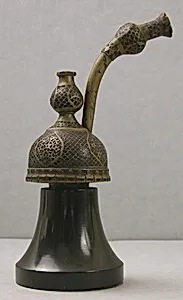
Medium
Zinc alloy; cast, engraved, inlaid with brass (bidri ware)
Dimensions
H. 7 13/16 in. (19.8 cm) W. 4 3/8 in. (11.1 cm) Diam. 3 in. (7.6 cm) Wt. 8.4 oz. (238.163 g)
Classification
Metal
Department
Islamic Art
Museum
Metropolitan Museum of Art, New York, NY
Credit
Edward C. Moore Collection, Bequest of Edward C. Moore, 1891
Accession Number
91.1.577
Rights
Public Domain
Tags
Art Historical Context
This exquisite **Water Pipe Top**, crafted in the 19th by an unknown artist, exemplifies the refined artistry of bidri ware distinctive metalworking tradition from the Deccan region India, often linked to Islamic patronage. Made from a zinc alloy, the piece measures just 7 13/16 inches high and weighs a mere 8.4 ounces, yet it served a practical purpose as the mouthpiece or top of a hookah (water pipe), a common smoking accessory in South Asian and Ottoman cultures. Housed in the Metropolitan Museum of Art's Islamic Art department (Edward C. Moore Collection, 1891), it highlights the fusion of utility and ornament in everyday objects. The fabrication technique is masterful: the zinc alloy was cast, meticulously engraved with intricate patterns, and inlaid with brass to create striking contrasts. Bidri ware's hallmark process involved treating the dark base metal with a black patina, then polishing the inlays to shine against it, producing a damascene effect reminiscent of Persian and Indian decorative metalwork. This method, dating back to the 16th century under Bijapur sultans, underscores the technical prowess of Deccani artisans. Culturally, such objects bridged leisure and luxury, reflecting social rituals around tobacco use introduced via Portuguese trade. Though utilitarian, its engraved motifs likely evoked floral or geometric designs symbolic of Islamic aesthetics, inviting admiration for its portability and enduring craftsmanship. A testament to overlooked everyday artistry! (218 words)