
酒井抱一筆 白衣観音図|White-Robed Kannon
1823
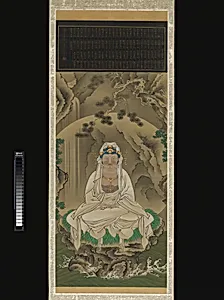
Medium
Hanging scroll; ink, color, and gold on silk
Dimensions
Image: 33 5/8 × 14 in. (85.4 × 35.6 cm) Overall with mounting: 68 1/4 × 15 7/8 in. (173.4 × 40.3 cm) Overall with knobs: 68 1/4 × 17 3/4 in. (173.4 × 45.1 cm)
Classification
Paintings
Culture & Period
Japan · Edo period (1615–1868)
Department
Asian Art
Museum
Metropolitan Museum of Art, New York, NY
Credit
Purchase, Friends of Asian Art Gifts, 2017
Accession Number
2017.293
Rights
Public Domain
Tags
Art Historical Context
In the late Edo period (1615–1868), master painter Sakai Hōitsu1761–1828), a leading figure in the Rinpa school, created this exquisite hanging scroll titled *Whiteobed Kannon* in 1823. Hōitsu, renowned for reviving the decorative elegance of earlier Rinpa artists like Ogata Kōrin, his hand to Buddhist iconography here, portraying Kannon (Avalokiteshvara), the bodhisattva of infinite compassion. Clad in flowing white robes symbolizing purity, this serene figure embodies mercy and salvation, a popular devotional subject in Japanese Buddhism during a time of relative peace and artistic flourishing. Crafted on luxurious silk with ink, vibrant colors, and gold flecks, the scroll exemplifies Rinpa's opulent techniques. Gold enhances the divine glow, while delicate ink lines and asymmetrical composition evoke ethereal grace, blending spiritual depth with decorative beauty. Measuring 33⅝ × 14 inches, it was designed for vertical display in temples or homes during rituals, allowing viewers to unroll it for contemplation. Acquired by the Metropolitan Museum of Art in 2017, this work highlights Edo Japan's fusion of faith and artistry, inviting modern visitors to reflect on Kannon's timeless role as a protector amid life's trials.
About the Artist
Sakai Hōitsu · 1761–1828
Japanese, 1761–1828