
Wine Cup with Cover
18th/19th century
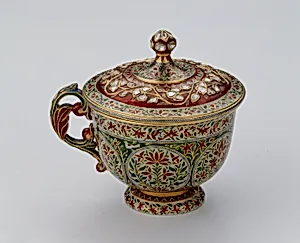
Medium
Gold and diamonds inset in the kundan technique, with polychrome enamel (minakari)
Dimensions
9.2 × 11.6 × 9.3 cm (3 5/8 × 4 5/8 × 3 5/8 in.)
Classification
drinking vessel
Department
Arts of Asia
Museum
Art Institute of Chicago
Accession Number
28031
Rights
Public Domain
Art Historical Context
This exquisite *Wine Cup with Cover* the 18th or 19th century exemplifies the opulent craftsmanship of South Asian metalwork, likely from an Indian royal court. Crafted from gold inlaid with diamonds using the intricate *kundan* technique—where gems are set into a thin gold foil backing without prongs for a seamless, radiant effect—the cup is further adorned with *minakari*, or polychrome enamel. This vibrant enameling process involves fusing colored glass powders onto the gold surface in vivid hues, creating durable, jewel-like patterns that evoke floral motifs or geometric designs symbolic of prosperity and divine beauty. Measuring a compact 9.2 × 11.6 × 9.3 cm, this covered drinking vessel was no ordinary cup but a luxury item for elite banquets, where wine (often *sharbat* or imported spirits) signified status and refinement. Produced during a period of Mughal or Rajput patronage, when such techniques flourished in centers like Jaipur, it highlights the fusion of jewelry-making artistry with functional objects. Today, housed in the Art Institute of Chicago's Arts of Asia department, it offers a glimpse into the lavish material culture of pre-colonial India, where goldsmiths transformed everyday rituals into displays of imperial splendor.
About the Artist
Unknown
The artist designated as "Unknown" in our virtual museum's collection exemplifies a poignant chapter in art history: creators whose identities have faded into obscurity despite the enduring power of their work. With only one known artwork attributed to them in our holdings, this figure represents countless anonymous hands that shaped visual culture across centuries. Museums worldwide, including th...