
Zoomorphic Figure
Unknown Artist
9th–17th century
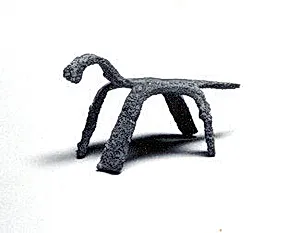
Medium
Copper alloy
Dimensions
H x W x D: 5/8 x 3/8 x 1in. (1.6 x 1 x 2.5cm)
Classification
Metal-Ornaments
Culture
Mali
Department
Arts of Africa, Oceania, and the Americas
Museum
Metropolitan Museum of Art, New York, NY
Credit
Gift of Mr. and Mrs. Arnold Syrop, 1987
Accession Number
1987.454.12
Rights
Public Domain
Tags
Art Historical Context
This delicate Zoomorphic Figure, crafted from copper alloy, hails from the vibrant cultural heritage of Mali and dates to between the 9th and 17th centuries. Measuring just 5/8 x 3/8 x 1 inches, its miniature scale suggests it served as a personal ornament—perhaps a pendant, earring, or amulet—worn close to the body in daily life or rituals. The term "zoomorphic" reveals its animal form, a common motif in West African art symbolizing connections to the natural world, ancestral spirits, or protective forces. In Malian metalworking traditions, copper alloys were prized for their durability and luster, often cast using sophisticated lost-wax techniques that allowed for intricate detailing on such tiny surfaces. Spanning over eight centuries, this piece reflects the enduring artistic ingenuity of Mali's diverse ethnic groups, from pre-imperial times through the height of the Mali Empire (c. 1235–1670), a period renowned for trans-Saharan trade in metals and gold. Such ornaments highlight the skill of anonymous artisans whose works bridged utility and spirituality. Today, this gift to the Metropolitan Museum of Art from Mr. and Mrs. Arnold Syrop in 1987 invites us to marvel at Mali's subtle mastery of form, where a small figure carries profound cultural weight in the Arts of Africa collection.