Ctrl K
935–1020
Abu'l Qasim Firdausi, born around 940 in the village of Paj near Tus in Khorasan (modern-day Iran), emerged from a family of landed gentry known as dehqans, who preserved ancient Iranian oral traditions amid the cultural renaissance of the Samanid Empire. Little is documented about his early life or formal training, though he likely received a basic education including Arabic literacy, immersing himself in pre-Islamic legends and Zoroastrian lore from his rural surroundings. By his thirties, Firdausi had begun composing poetry, influenced by the national-cultural movement in Khorasan and the prose epic Shahnameh of Abu Mansuri (957). He took up the unfinished epic project of the poet Daqiqi after the latter's death around 976–77, vowing to complete it in pure Persian to revive Iran's mythic heritage.
Firdausi's magnum opus, the Shahnameh (Book of Kings), spans some 50,000 couplets chronicling Iran's mythical and historical kings from creation to the Arab conquest in 651 CE. Begun circa 977, the first version was finished by 994, with a revised edition presented to Sultan Mahmud of Ghazni in 1010 after over three decades of labor—one couplet per day. Though promised patronage, Firdausi received scant reward, prompting a scathing satire against the Ghaznavid ruler. He worked in the classical Persian epic tradition (hamasa), blending hyperbole, vivid similes, dynamic narratives, and ethical themes of justice, patriotism, and wisdom, free of Arabic loanwords to purify the language post-Islamic conquest.
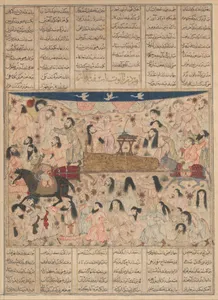
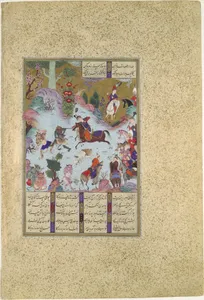
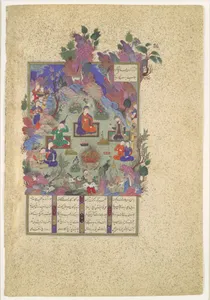
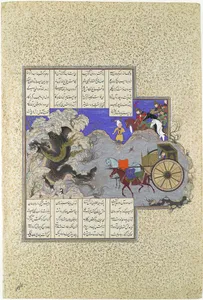
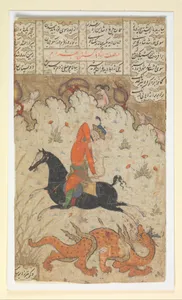
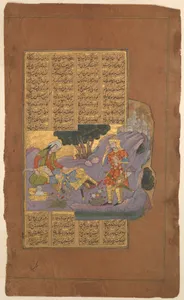
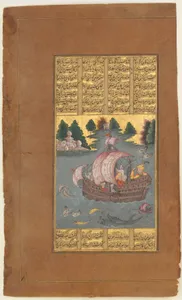
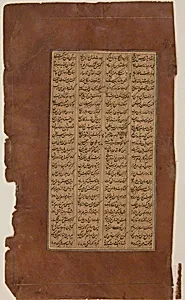
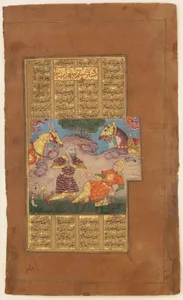
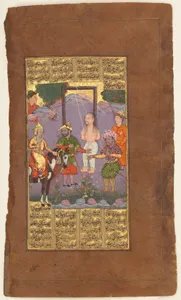
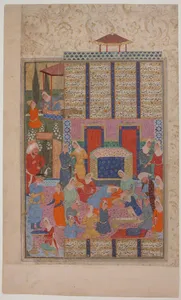
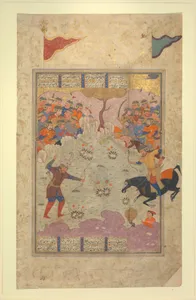
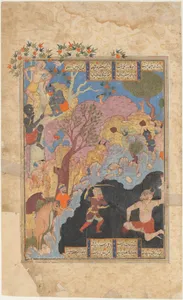
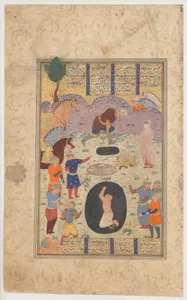
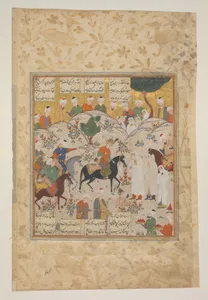
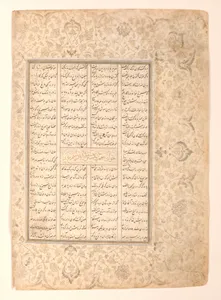
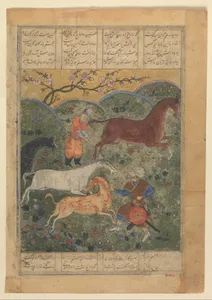
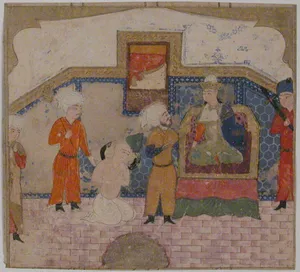
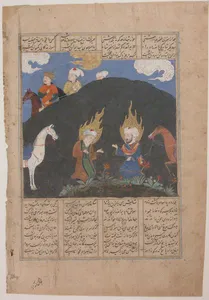
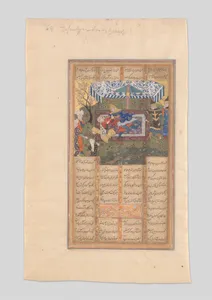
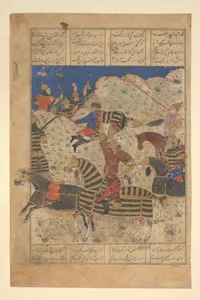
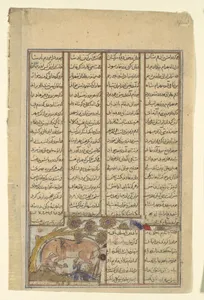
While Firdausi himself was a poet rather than a visual artist, his Shahnameh became the cornerstone of Persianate illumination, inspiring generations of miniaturists, calligraphers, and painters across Timurid, Safavid, and Mughal courts. Iconic manuscripts like the Shah Tahmasp Shahnama (1524–35), with paintings by masters such as Sultan Muhammad and Aqa Mirak, feature heroic scenes of Rustam and Sohrab rendered in jewel-toned inks and gold—over 250 illustrations in that volume alone. Our collection holds 112 such folios, capturing battles, feasts, and thrones that visualize Firdausi's timeless sagas.
Firdausi died around 1020 (or 1025) in Tus, buried in his orchard after local clerics denied him a Muslim cemetery due to his Shiʿite leanings. His legacy endures as the architect of Iran's national epic, fostering a visual tradition that defined Persian miniature painting for centuries and symbolizing cultural resilience. Celebrated as Hakim (sage), his tomb remains a pilgrimage site, embodying the fusion of poetry and artistry that shaped Islamic art history.