Ctrl K
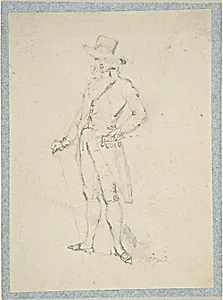
1755–1834
Thomas Stothard RA (1755–1834) was born on 17 August 1755 at the Black Horse Inn in London's Long Acre, the son of a prosperous publican originally from Stutton near Tadcaster. A delicate child, he was sent at age five to relatives in Yorkshire, attending schools in Acomb, Tadcaster, and later Ilford, Essex, where he honed his drawing skills by copying prints. Following his father's death in 1770, Stothard apprenticed to a draughtsman of patterns for brocaded silks in Spitalfields, receiving encouragement from the likes of Sir Joshua Reynolds and Richard Wilson. He entered the Royal Academy Schools in 1777, forging lifelong friendships with sculptors John Flaxman and poet-engraver William Blake, though the latter soured over a later commission.
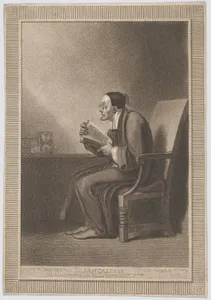
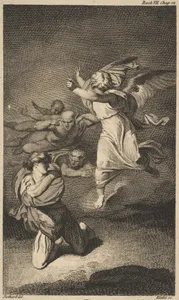
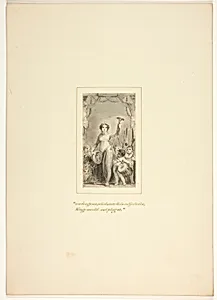
Stothard's versatile style blended graceful compositions, tender pathos, and rich, Rubens-inspired coloring, excelling in small-scale historical and Arcadian scenes with a sentimental charm influenced by Angelica Kauffmann and Cipriani. Elected an Associate of the Royal Academy in 1791 and full Academician in 1794, he served as librarian from 1812 and produced around 5,000 designs, nearly 3,000 of which were engraved for books and magazines. His illustrations graced Bell's Poets, Harrison's Novelist's Magazine (1780s, featuring 148 scenes from Smollett's Peregrine Pickle and Richardson's novels), Defoe's Robinson Crusoe (1790 and 1820 editions), Bunyan's Pilgrim's Progress (1788), Pope's Rape of the Lock (1798), and Samuel Rogers's Italy (1830).
Among his masterpieces, the oil painting Procession of the Canterbury Pilgrims (1806–1807, Tate Britain)—commissioned by Robert Hartley Cromek and engraved by Schiavonetti and Heath—captured Chaucer's pilgrims in elegant procession, sparking controversy with Blake. The Vintage (1821, National Gallery) showcased his glowing colorism, while grand decorations included the Burghley House staircase (1799–1803, scenes of War, Intemperance, and Orpheus), Hafod library frescoes from Froissart (1810), and Edinburgh's Advocates' Library cupola (1822, Apollo and the Muses). He also designed the Wellington Shield (1814).
Married to Rebecca Watkins from 1783 until her death in 1825, Stothard fathered eleven children, including painters Robert T. Stothard and antiquarian illustrator Charles Alfred, sculptor Henry (pupil of Flaxman), and medallist Alfred Joseph. His prolific output revolutionized book illustration and decorative arts, leaving a legacy of exquisite, widely reproduced designs that bridged neoclassicism and Romanticism, admired for their poetic grace and enduring appeal in British collections.

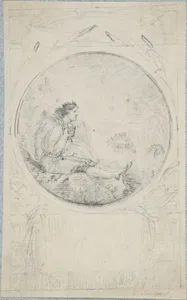
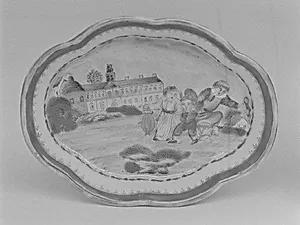
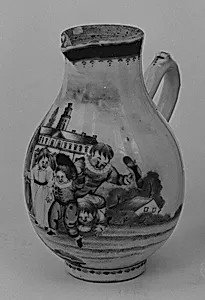
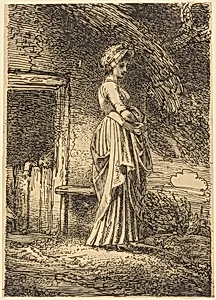
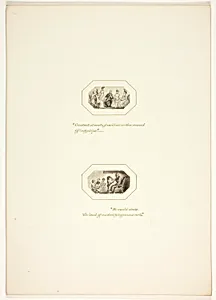
![Roger de Coverley and the Gypsies [verso]](https://images.artheonmuseum.org/nga/thumb/roger-de-coverley-and-the-gypsies-verso-nga-76157.webp)
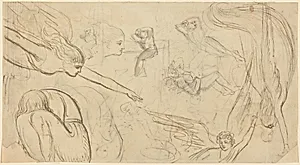
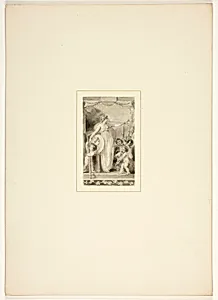
![Design for a Book Illustration of Circe and Odysseus [recto]](https://images.artheonmuseum.org/nga/thumb/design-for-a-book-illustration-of-circe-and-nga-76156.webp)