Ctrl K
1796–1875
Jean-Baptiste-Camille Corot, born in Paris on July 16, 1796, into a prosperous bourgeois family—his father a former wig maker turned draper, his mother a successful milliner—initially resisted his artistic calling. After a lackluster education at the Lycée Pierre-Corneille in Rouen and failed apprenticeships in business, he abandoned commerce at age 26, thanks to a generous parental allowance following his sister's death. Corot turned to landscape painting around 1821, studying under Achille Etna Michallon, a protégé of Jacques-Louis David who emphasized plein-air sketching in the forests of Fontainebleau and precise renderings inspired by Pierre-Henri de Valenciennes. After Michallon's early death in 1822, he continued with Jean-Victor Bertin, refining Neoclassical techniques through copying lithographs and botanical studies.
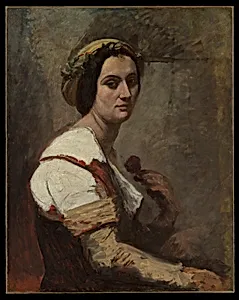
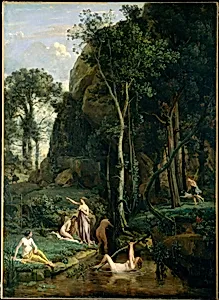
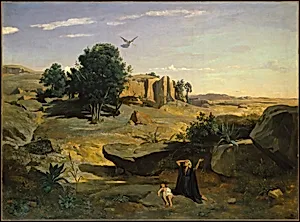
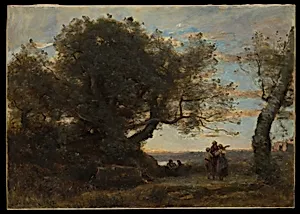
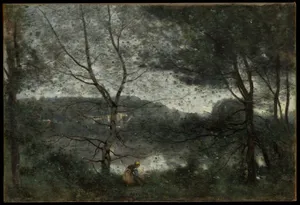
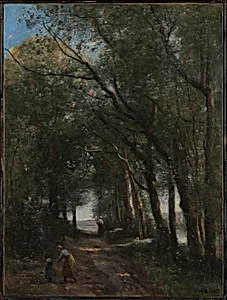
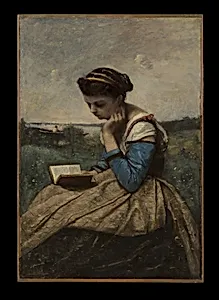
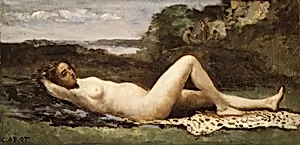
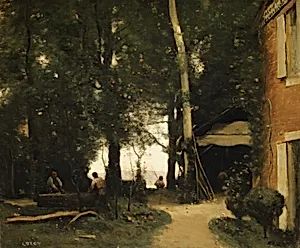
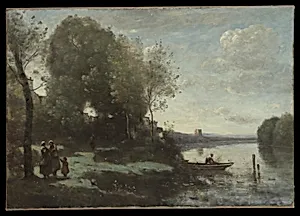
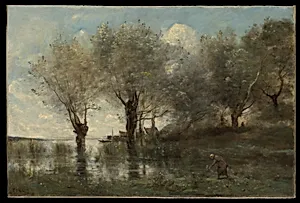
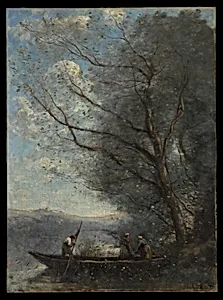
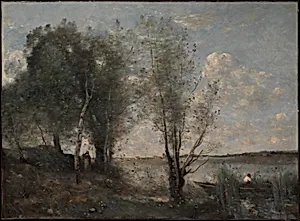
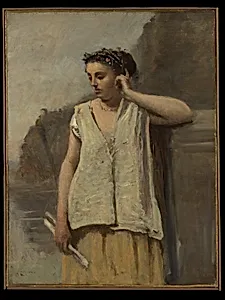
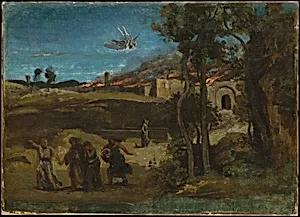
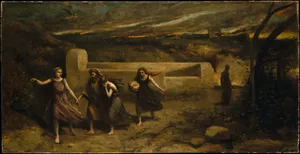
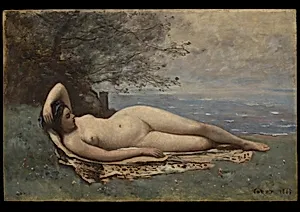
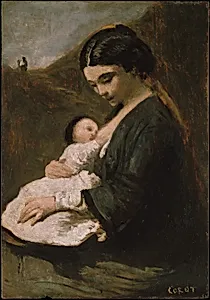
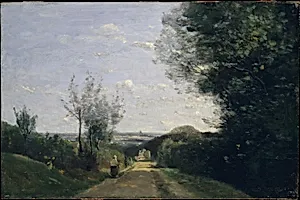
Corot's first Italian sojourn from 1825 to 1828 transformed his vision, yielding luminous oil sketches amid classical ruins. He debuted at the 1827 Salon with *View at Narni*, blending topographic accuracy with poetic idealization drawn from Claude Lorrain and Nicolas Poussin. Frequent visits to Barbizon starting in 1829 introduced him to Théodore Rousseau, Jean-François Millet, and others, where he pioneered outdoor oil studies that anticipated Impressionism. His style evolved from tight, monochromatic early works to softer, silvery late paintings with fluid brushwork, restrained palettes of greens and browns, and atmospheric "souvenirs" evoking memory over mere topography. By mid-career, he balanced Salon submissions—mythological scenes like *Hagar in the Wilderness* (1835)—with intimate portraits of family, such as his niece Laure Sennegon.
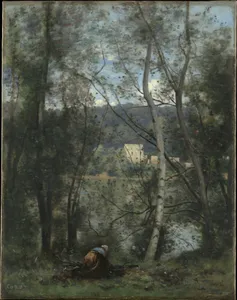
Among his masterpieces are *The Bridge at Narni* (1826, Louvre), *Souvenir de Mortefontaine* (1864, Louvre), *Ville d'Avray* (1867, National Gallery of Art), and *Le Baptême du Christ* (1845–1847, Église Saint-Nicolas-du-Chardonnet). Prolific with over 3,000 paintings, etchings, and drawings, Corot earned the Légion d'honneur in 1846 and supported peers like Honoré Daumier. His legacy bridges Neoclassicism and modernity; Claude Monet deemed him "the only master," while he mentored Camille Pissarro, Berthe Morisot, and others, profoundly shaping Impressionist light and lyricism. Corot died in Paris on February 22, 1875, leaving a charitable spirit and enduring poetic landscapes.