Ctrl K
1885–1936
Heinrich Hoerle, born on September 1, 1895, in Cologne, Germany, emerged as a pivotal figure in the radical art scene of the Weimar Republic. He studied at the Cologne School of Arts and Crafts but was largely self-taught, honing his skills amid the turmoil of World War I. In 1919, he married fellow artist Angelika Hoerle (née Fick), with whom he plunged into Cologne's Dada movement, co-founding the avant-garde group Stupid and collaborating on leftist publications like *Der Ventilator*. Their shared activism included distributing anti-war materials and establishing a "Dadaheim" hub, though tragedy struck when Angelika died of tuberculosis in 1923. Hoerle's early associations extended to Franz Wilhelm Seiwert, leading to the formation of the Cologne Progressives (Gruppe Progressiver Künstler Köln) alongside Seiwert and Gerd Arntz, a collective dedicated to socialist ideals and workers' rights.
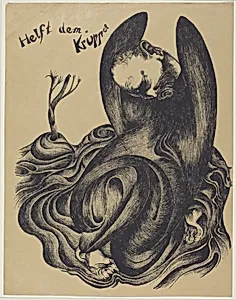
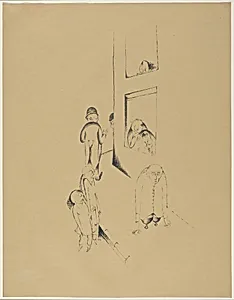
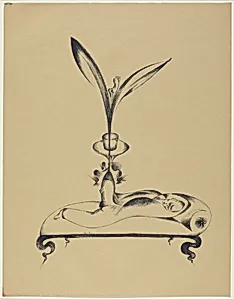
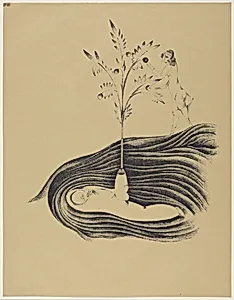
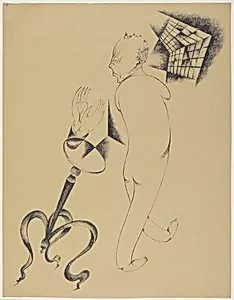
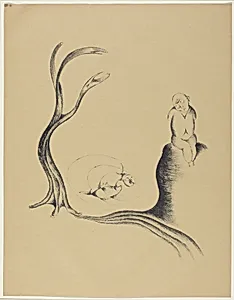
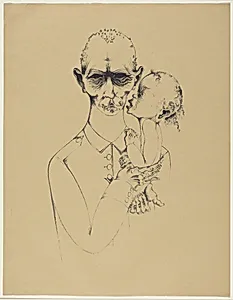
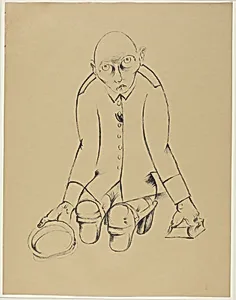
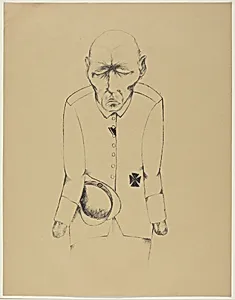
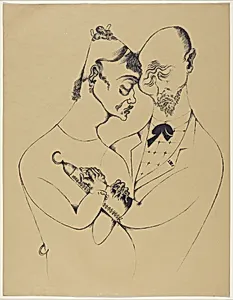
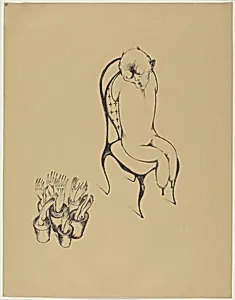
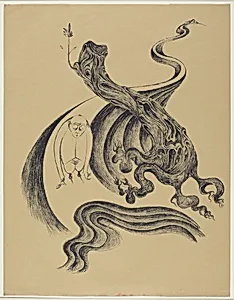
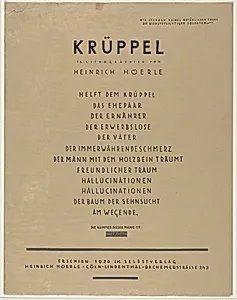
Hoerle's style evolved into a stark figurative constructivism within the New Objectivity (Neue Sachlichkeit) framework, drawing from Russian artists like Vladimir Tatlin and El Lissitzky, Fernand Léger, and De Stijl. His paintings and prints rejected Expressionist subjectivity for rigid geometries that underscored social critique, portraying the dehumanizing effects of war and capitalism. The seminal *Krüppelmappe* (Cripples Portfolio) of 1920, a series of twelve lithographs co-published with Angelika via their Schloemilch Verlag, depicted war veterans' suffering in haunting vignettes such as *Das Ehepaar* (The Married Couple), *Der Erwerbslose* (The Unemployed Man), *Hällucinationen* (Hallucinations), and *Freundlicher Träum* (Friendly Dreams). These works, born from his own conscientious objector stance, fused political agitation with innovative form.
In the late 1920s and early 1930s, Hoerle contributed to the Progressives' journal *a-z* and produced monumental pieces like *Denkmal der unbekannten Prothesen* (Monument to Unknown Prostheses, 1930) and *Worker (Self-Portrait in Front of Trees and Chimneys)* (1931), an oil envisioning class unity between industrial laborers and farmers through bifurcated compositions. His commitment to public murals and numbered series aimed at collective impact. Branded "degenerate art" by the Nazis after 1933, Hoerle's oeuvre was suppressed until posthumous recognition following his death on July 7, 1936, in Cologne. Today, his works grace institutions like the Museum Ludwig and Harvard Art Museums, embodying the era's urgent fusion of art and social revolution.