Ctrl K
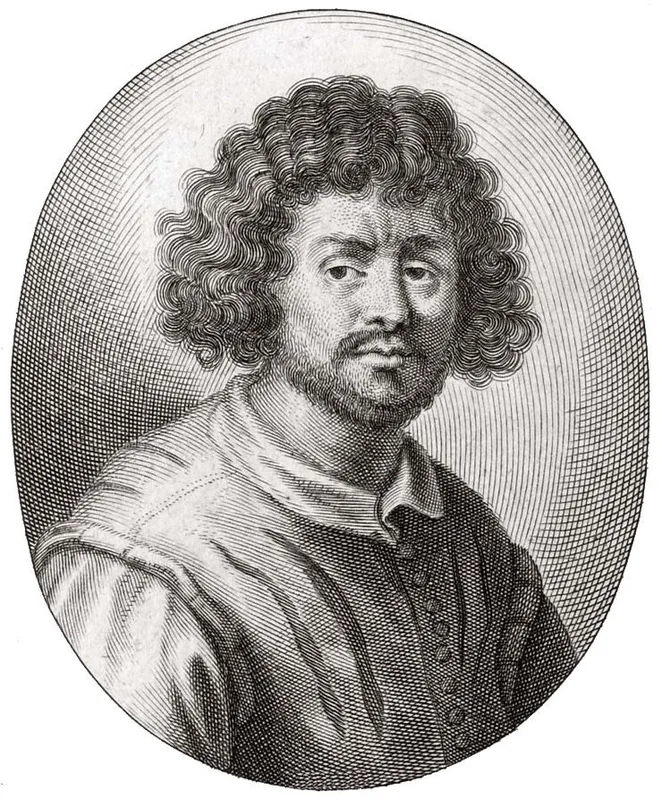
1604–1682
Movements
Occupations
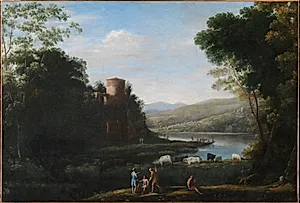
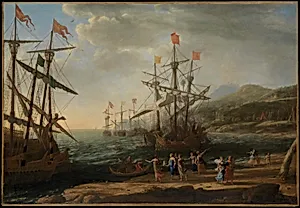
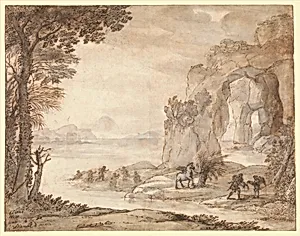
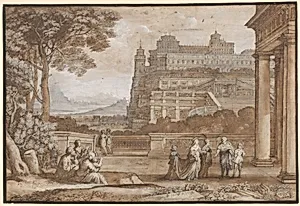
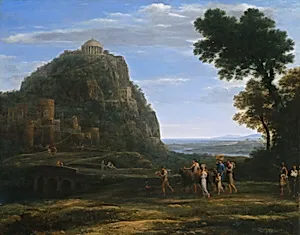
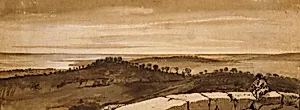
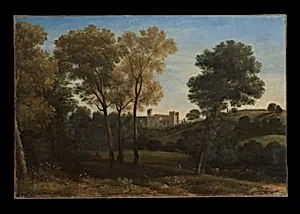
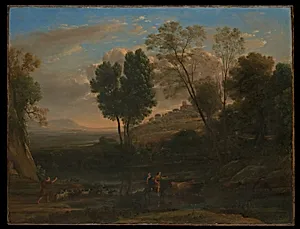
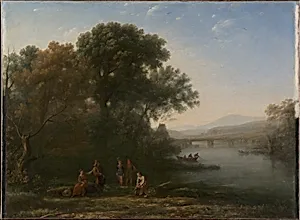
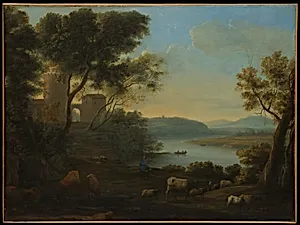
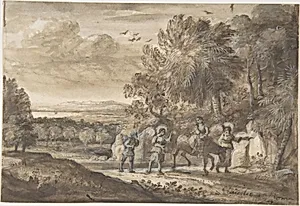
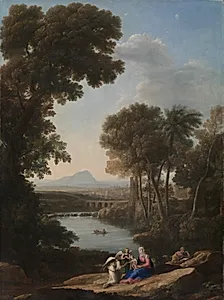
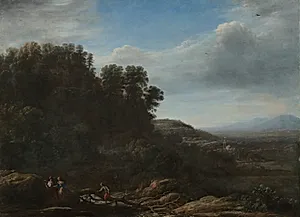
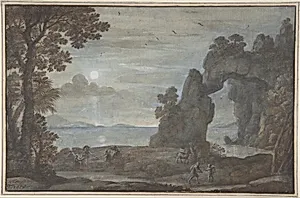
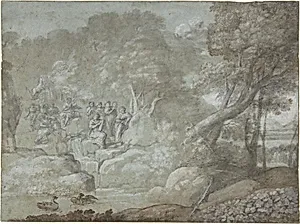
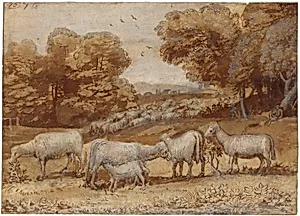
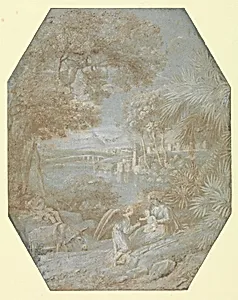
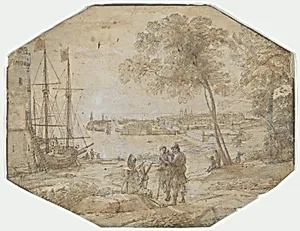
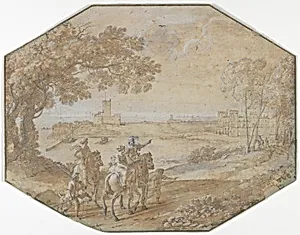
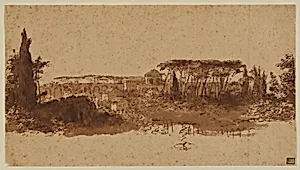
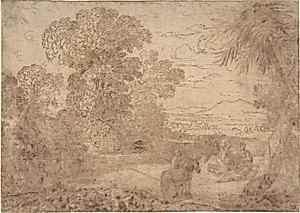
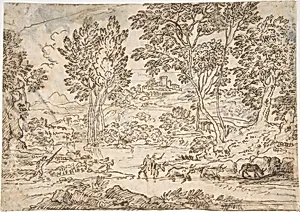
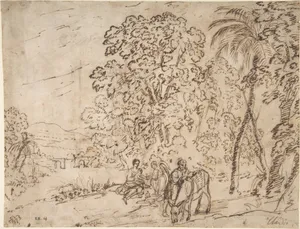
Claude Lorrain (c. 1600-1682), born Claude Gellée in the village of Chamagne in northeastern France's Duchy of Lorraine, stands as one of the most influential landscape painters in Western art history. Orphaned by age twelve, his journey to artistic mastery was unconventional—beginning with apprenticeships in pastry-making and inlay work before destiny led him to Rome around 1620, where he would spend nearly his entire career. Claude's artistic education proved transformative. He studied under Goffredo Wals in Naples and subsequently trained with Agostino Tassi in Rome, a master of illusionistic architectural frescoes and landscape painting. After briefly returning to Lorraine to work with Claude Deruet, he permanently settled in Rome around 1626-1627, establishing his studio near the Spanish Steps in the Via Margutta neighborhood, where he remained until his death. By the 1630s, Claude had revolutionized landscape painting and achieved extraordinary commercial success. He secured prestigious commissions from Pope Urban VIII, Philip IV of Spain, and numerous cardinals, establishing himself as Italy's leading landscapist. His significance lies in elevating landscape from a minor decorative genre to a major form of artistic expression equal to history painting. Claude pioneered the radical inclusion of the sun as a visible light source—virtually unprecedented before his work—and mastered the representation of atmospheric effects at dawn and dusk, what he called "the most poetic times of day." His technique combined empirical observation with classical idealization. Claude habitually sketched outdoors, "lying in the fields before break of day and until night" to capture nature's ephemeral light. In his studio, he employed meticulous layering techniques: applying varied ground layers over white-primed canvas, then building incredibly thin, luminous paint layers with constantly shifting hues. His compositions balanced naturalistic coastal scenes and the Roman Campagna with classical architecture and mythological narratives drawn from Virgil and Ovid. Claude's most significant documentary achievement was the Liber Veritatis (Book of Truth), containing drawings of approximately 195 paintings created between 1635 and 1682. Originally conceived to prevent forgeries—a testament to his popularity—this album now resides in the British Museum as an invaluable record of his artistic evolution. Claude's legacy profoundly shaped European art for two centuries. John Constable proclaimed him "the most perfect landscape painter the world ever saw," while J.M.W. Turner studied his work obsessively. The "Claude glass"—a tinted convex mirror used by artists to frame landscapes—was named in his honor. Though he lived modestly, never married (though he adopted a daughter, Agnese), and received minimal formal education, Claude died prosperous in Rome on November 23, 1682, having fundamentally transformed how artists perceived and depicted the natural world.
Wikidata/Wikimedia Commons