Ctrl K
1726–1785
**Luigi Valadier (1726–1785)** was a leading Italian goldsmith, silversmith, jeweler, and sculptor active in eighteenth-century Rome. Born in Rome on February 26, 1726, he was the son of Andrea Valadier, a French-born silversmith who had settled in the city in 1714 and established a successful workshop on via del Babuino. Luigi trained and began his career in his father’s workshop, assuming its direction after Andrea’s death in 1759.
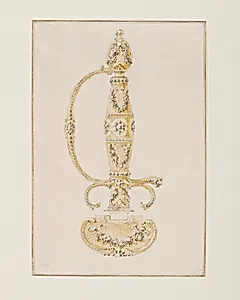
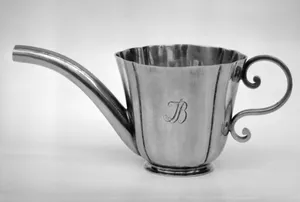
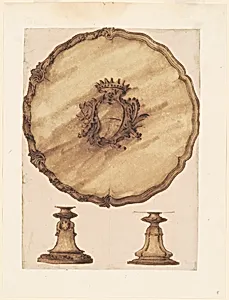
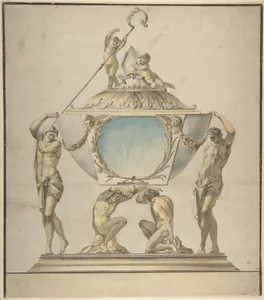
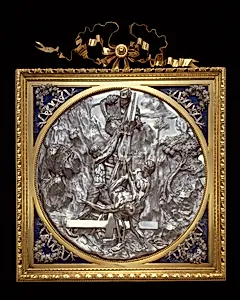
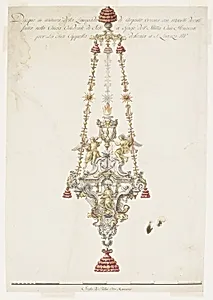
He became a master goldsmith in 1760 and served as the favored artisan for several popes beginning in 1769, as well as for prominent Italian and foreign patrons including Elector Carlo Teodoro of Bavaria and Cardinal Enrico Benedetto Stuart, Duke of York. Valadier’s workshop produced a wide range of luxurious objects—silverware, bronze furnishings, jewelry, and decorative pieces—often incorporating precious stones, enamel, wood, and glass. His style blended technical virtuosity with neoclassical sensibilities, frequently drawing on classical prototypes to create scaled-down copies and innovative designs for elite collectors.
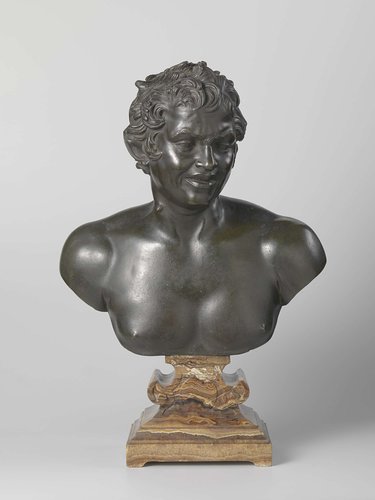
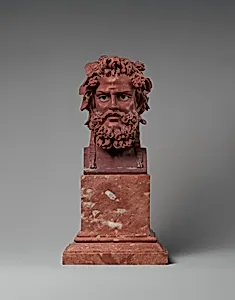
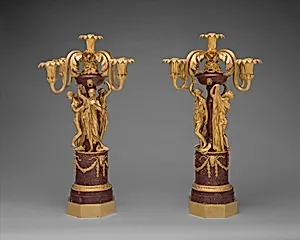
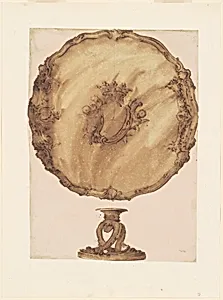
Among his most celebrated commissions was the grand silver high altar and accompanying liturgical set for Monreale Cathedral (1770), a lapis-lazuli chalice given by Pope Pius VI to King Stanisław II August of Poland, and a monumental silver mirror for Palazzo Chigi. He also created works such as the baptismal font in Santa Maria Maggiore, elaborate candelabra, porphyry tables, and classical-inspired sculptures including a laughing faun and herms of Dionysus. Valadier’s output reached clients across Europe and beyond, with pieces in collections from Mexico to Austria.
Valadier’s life ended tragically on September 15, 1785, when he drowned himself in the Tiber River amid financial difficulties while overseeing the casting of the great bell for St. Peter’s Basilica; the project was completed by his son Giuseppe. He was the father of the renowned neoclassical architect Giuseppe Valadier as well as silversmiths Filippo, Tommaso, and a younger Luigi. His workshop’s legacy endured through his children and the many exquisite objects that continue to exemplify Roman eighteenth-century luxury craftsmanship.