Ctrl K
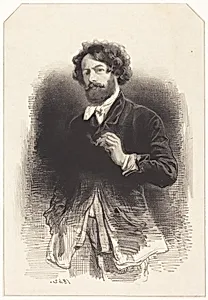
1804–1866
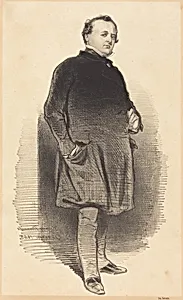
Paul Gavarni, born Sulpice Guillaume Chevalier on January 13, 1804, in Paris to a cooper father from Burgundy and mother Marie-Monique Thiémet—whose brother, painter Guillaume Thiémet, served as his godfather—began his career far from the art world. As a youth, he worked in a machine factory and studied mechanical drawing at the Conservatoire des Arts et Métiers in 1818, followed by evening classes in architectural and mechanical drawing that secured him a post as a government draughtsman. Self-taught in figure drawing from life around 1828, Gavarni transitioned to lithography in his late twenties, signing his early fashion designs and album illustrations like *Récréations diabolicofantasmagoriques* (1825) with his adopted pseudonym, inspired by the Pyrenean cirque.
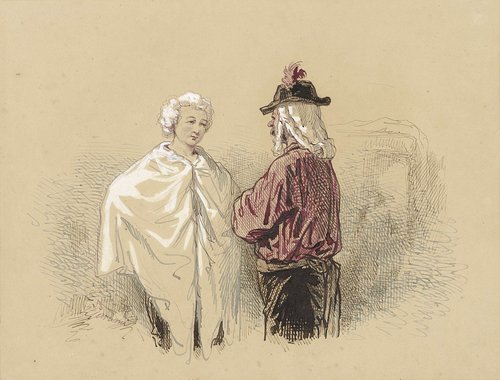
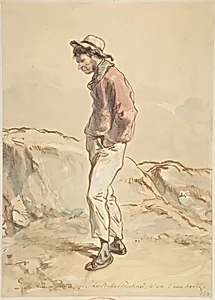
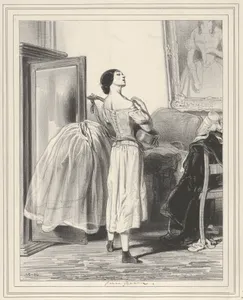
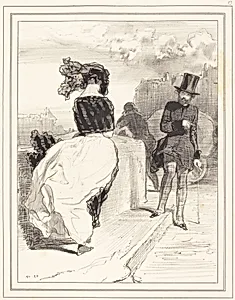
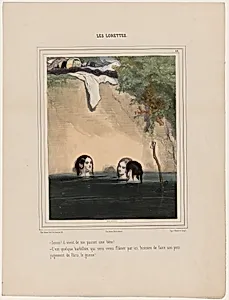
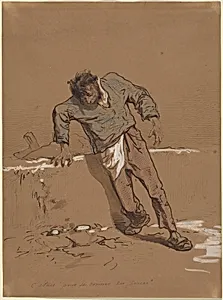
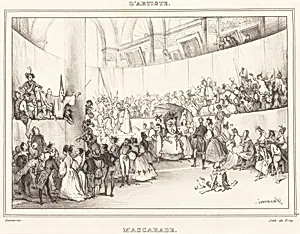
From 1830 to 1838, Gavarni designed costumes for periodicals like *La Mode*, but his breakthrough came with witty lithographs capturing Parisian society's foibles for *Le Charivari* starting in the late 1830s. His style—sharp, graceful lines paired with ironic captions—painted vivid comedies of manners among *lorettes*, actresses, and *débardeurs*, as in series like *Les Lorettes*, *Les Actrices*, *Les Fourberies des Femmes*, and *Les Étudiants de Paris* (1839–1846). He illustrated Eugène Sue's *Le Juif errant* (1843), Honoré de Balzac's works, and encyclopedic portrayals like *Les Français peints par eux-mêmes* (1840–1843) and the *Physiologies* collection (1840–1842), blending humor with subtle social critique akin to Honoré Daumier, though more polished and less vehement.
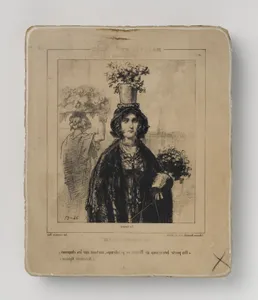
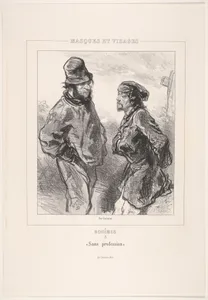
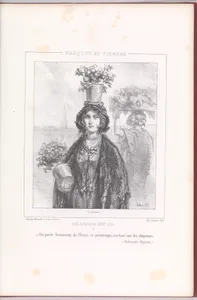
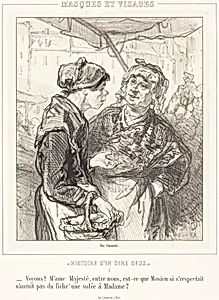
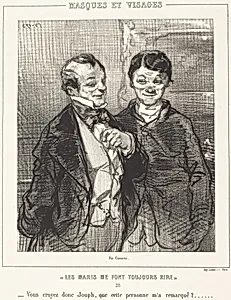
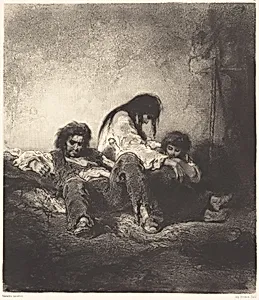
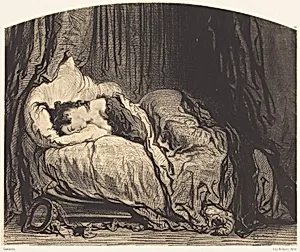
After imprisonment for debts from his failed *Journal des Gens du Monde* (1833) and marriage to Mademoiselle de Bonabry (1844), Gavarni traveled to London (1847–1851), producing acute observations like *Gavarni in London* before returning to etchings and watercolors. His later oeuvre darkened philosophically, as in *Masques et visages* (1852–1853, 329 lithographs), *Les Enfants terribles* (1857), and *Les Parents terribles*, reflecting family life's grotesqueries amid personal losses, including his son Jean's death. Awarded the Légion d'Honneur in 1852 and eulogized by the Goncourt brothers in *Gavarni: l'homme et l'œuvre* (1873), his enduring legacy lies in over 8,000 lithographs that dissect 19th-century French mores with elegant satire, influencing caricature and illustration for generations.