Ctrl K
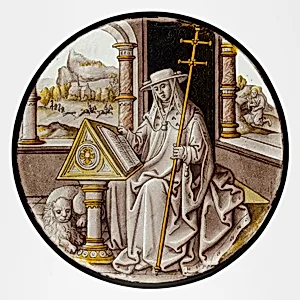
1500–1530
**Pseudo-Ortkens** (also known as Pseudo-Aert Ortkens) is the conventional name given to a workshop or group of South Netherlandish artists active in the Southern Netherlands, particularly around Antwerp and Brussels, from approximately 1500 to 1540. The name arose after earlier attributions to the glass painter Aert Ortkens (Arnold of Nijmegen) proved erroneous; scholars now recognize the output as the product of a cohesive workshop rather than a single hand. Roughly fifty stylistically consistent drawings have been assigned to the group, the majority serving as designs for painted glass roundels.
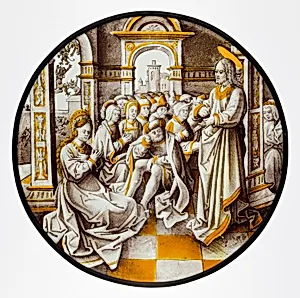
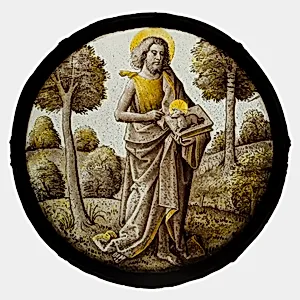
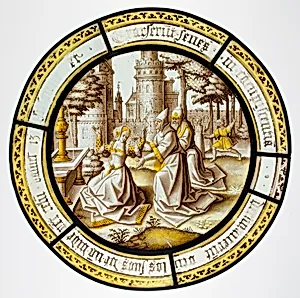
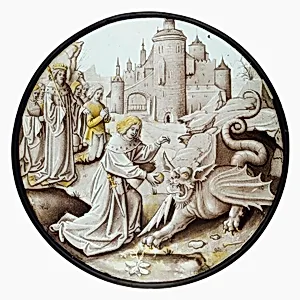
The artists worked in the vibrant tradition of early sixteenth-century Netherlandish draftsmanship, specializing in small-scale, circular compositions suited to stained-glass windows. Their drawings feature delicate pen work in brown ink, balanced figural groupings, and narrative clarity drawn from biblical, mythological, and historical subjects. Characteristic examples include designs such as *Dido Receiving the Trojans*, *The Stoning of the Elders*, and roundels depicting scenes like *Christ and the Adulterous Woman* or *Saint John the Baptist*. These works reflect the period’s interest in luminous, jewel-like glass painting while demonstrating a refined sense of composition and expressive gesture.
Although the individual identities of the workshop members remain unknown, their collective production documents the collaborative nature of glass design in the Low Countries during the transition from late Gothic to Renaissance styles. The group’s drawings survive in major collections, including the British Museum and the Metropolitan Museum of Art, where they continue to illuminate the technical and iconographic practices of South Netherlandish artisans. Their legacy lies in preserving a distinctive body of preparatory art that bridges painting, printmaking, and the applied arts of stained glass.