Ctrl K
1751–1801
Ralph Earl (1751–1801) was born on May 11 in Shrewsbury or Leicester, Massachusetts, the eldest of four children to Ralph Earle, a colonel in the Revolutionary army, and Phebe Whittemore Earl. Growing up amid farmers and craftsmen in Worcester County, Earl displayed prodigious talent as a self-taught artist, emulating the works of John Singleton Copley after observing his half-brother Henry Pelham in Boston in 1775. By 1774, he had established a studio in New Haven, Connecticut, where he married his cousin Sarah Gates, fathering daughter Phebe in 1775 and son John in 1777. His Loyalist sympathies—despite his father's Patriot role—led him to sketch early Revolutionary battle scenes at Lexington and Concord that year, collaborating with engraver Amos Doolittle on the first printed depictions of those events.
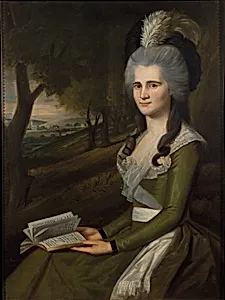
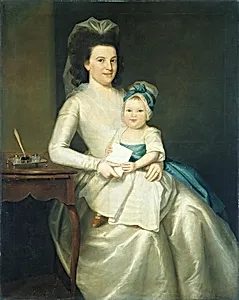
Fleeing persecution in 1778, Earl escaped to England disguised as a servant to a British officer, eventually studying under Benjamin West in London and exhibiting at the Royal Academy. There, he painted prominent figures, including a portrait of King George III, and married Ann Whiteside, with whom he had son Ralph Eleaser Whiteside Earl, a future painter. Returning to America in 1785 amid postwar optimism, he worked in New York, Boston, and New England, though debts landed him in debtor's prison from 1786 to 1788, where patrons like Elizabeth Schuyler Hamilton commissioned portraits to secure his release. As an itinerant painter, he produced over 183 portraits, refining his naive early style into sophisticated compositions blending portraiture with detailed landscapes.
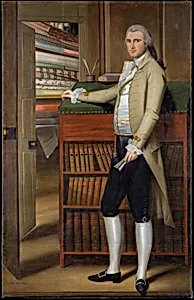
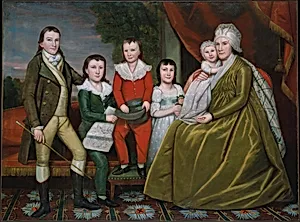
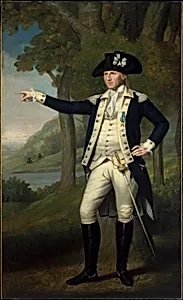
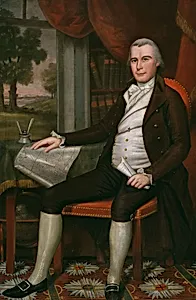
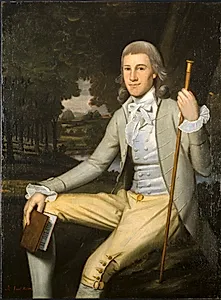
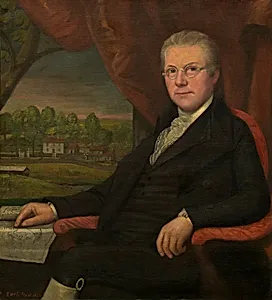
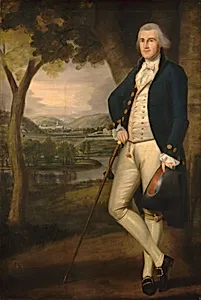
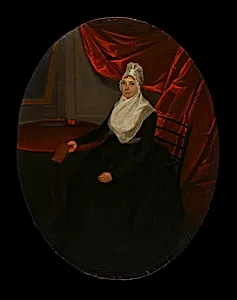
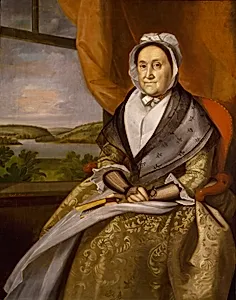
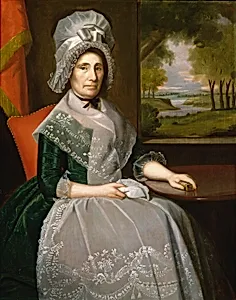
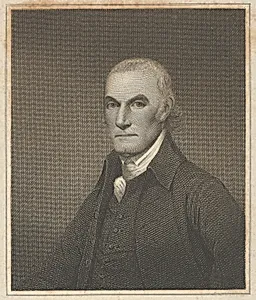
Earl's masterpieces include the iconic *Elijah Boardman* (1789), depicting the merchant amid his store's goods against a pastoral vista, and its pendant *Esther Boardman* (1789); full-length portraits like *Marinus Willett* (1791) and *Roger Sherman* (c. 1775); and landscapes such as his panoramic *Niagara Falls* (post-1786) and *View of Bennington* (1798), featuring a self-portrait. His battle engravings—"The Battle of Lexington" and others (1775)—captured Revolutionary fervor, while post-English works showcased elongated figures, rich attire, and expansive backgrounds celebrating patrons' status.
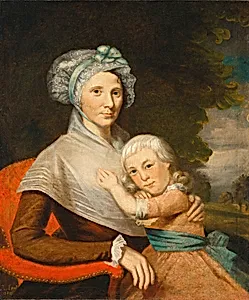
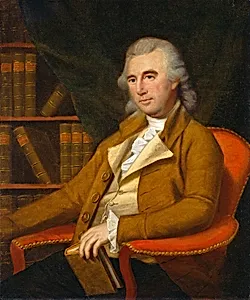
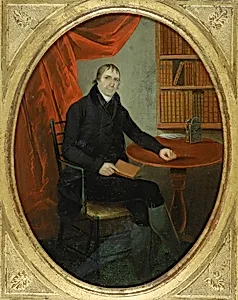
Earl's legacy endures as a pivotal early American portraitist, bridging colonial naiveté and cosmopolitan polish, influencing his son Ralph E. W. Earl, nephew Augustus Earle, and folk artist John Brewster Jr. Settling in Bolton, Connecticut, he succumbed to alcoholism on August 16, 1801, at age 50, leaving a vivid record of the new republic's elite.