Ctrl K
1803–1874
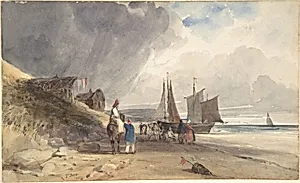
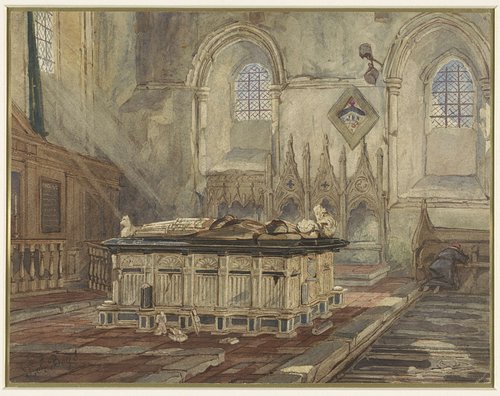
Thomas Shotter Boys was born on 2 January 1803 in Pentonville, London, and received his first professional training as an apprentice to the engraver George Cooke. When his apprenticeship concluded he crossed the Channel to Paris, a move that would transform his artistic direction entirely. There he encountered Richard Parkes Bonington, the brilliant English watercolourist whose fresh, luminous rendering of architecture and urban life had captivated both French and British audiences. Under Bonington's influence, Boys abandoned engraving and dedicated himself to painting in watercolour and eventually to lithography. The two artists became close, and Boys absorbed Bonington's lightness of touch and his ability to evoke the atmosphere of a street, a quayside, or a cathedral façade with apparent effortlessness.
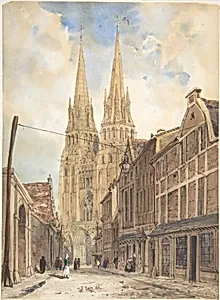
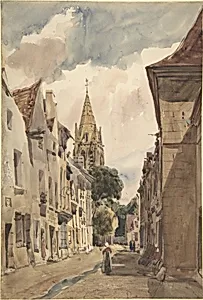
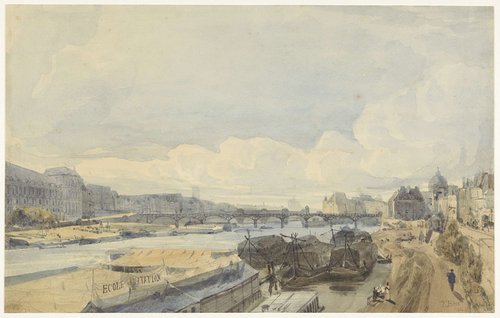
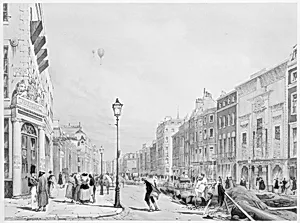
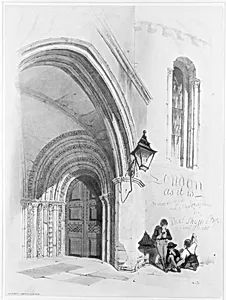
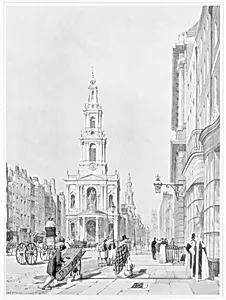
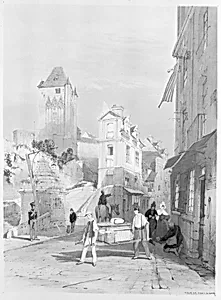
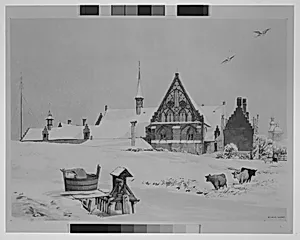
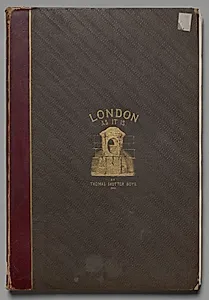
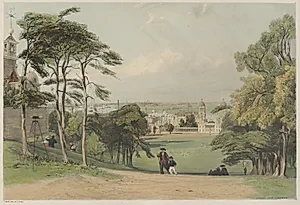
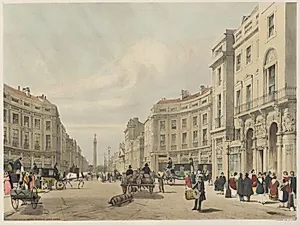
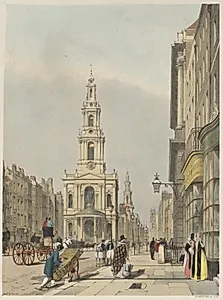
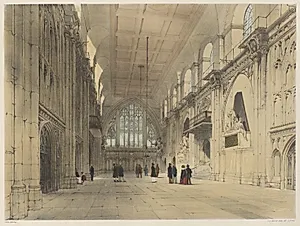
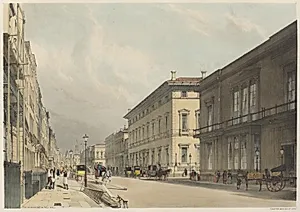
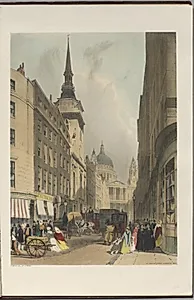
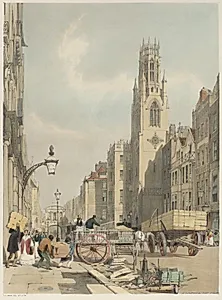
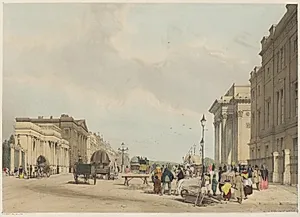
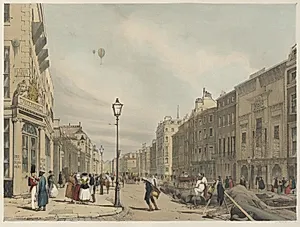
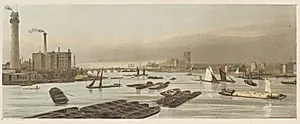
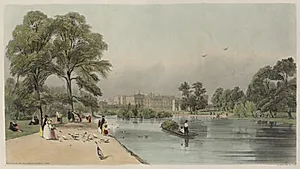
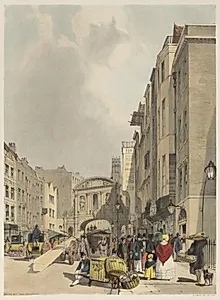
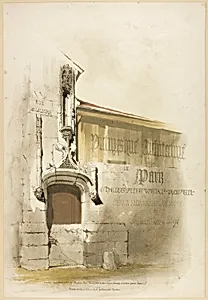
Boys exhibited at the Royal Academy for the first time in 1824 and in Paris in 1827, attracting attention for his architectural watercolours of Continental cities — Ghent, Antwerp, Rouen, Paris — rendered with a confident draughtsmanship that gave equal weight to weathered stone and lively street scene. His most celebrated achievement came in 1839 with Picturesque Architecture in Paris, Ghent, Antwerp, Rouen, etc., a landmark collection of colour lithographs drawn on stone by Boys himself and printed by Charles Joseph Hullmandel. Reviewers hailed it as the first fully successful demonstration of chromolithography brought to practical and artistic perfection, and King Louis-Philippe sent Boys a ring in personal recognition of the work's quality. In 1842 he published Original Views of London as it is, a comparable document of the British capital that now serves as a precious visual record of mid-Victorian London.
Boys was a member of the Institute of Painters in Water Colours and of several Continental artistic societies. He also contributed illustrations to Blackie's History of England and etched plates for John Ruskin's Stones of Venice. Though his later career was less prominent, his twin volumes of 1839 and 1842 secured his lasting reputation as one of the most accomplished architectural watercolourists and lithographers of his generation. He died in 1874, leaving behind an invaluable pictorial chronicle of European cities at a moment of transition between the old world and the new.