Ctrl K
1664–1729
Torii Kiyonobu I (1664–1729), born Shōbei in Osaka, was the second son of Torii Kiyomoto, a prominent kabuki actor specializing in onnagata roles and a painter of theater signboards. He studied painting under his father as well as Yoshida Hanbei and Hishikawa Moronobu, the pioneering ukiyo-e master whose figure styles profoundly shaped his early work. In 1687, at age twenty-four, Kiyonobu accompanied his father to Edo (modern Tokyo), where they quickly monopolized the production of kabuki promotional materials, including vibrant signboards designed to draw crowds from afar.
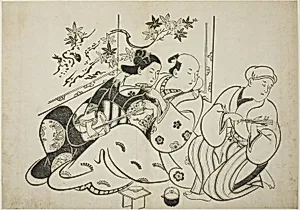
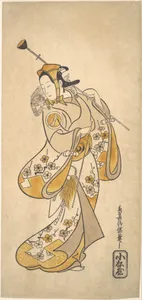
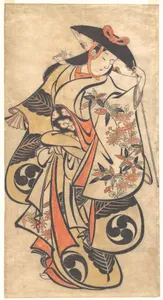
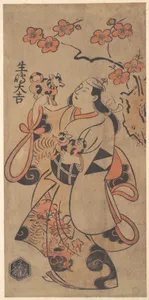
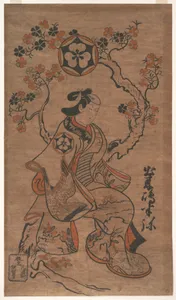
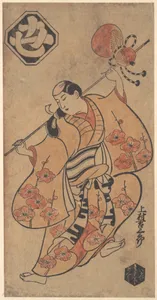
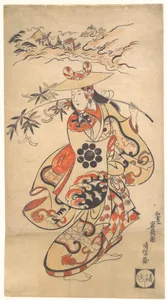
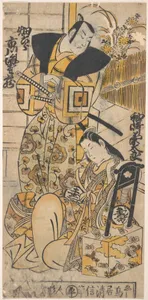
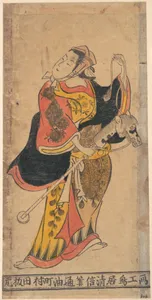
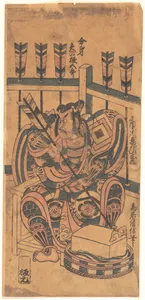
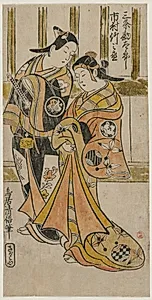
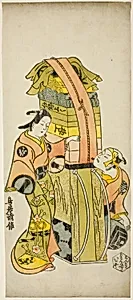
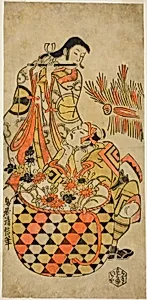
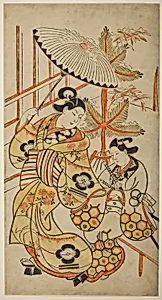
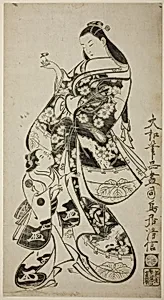
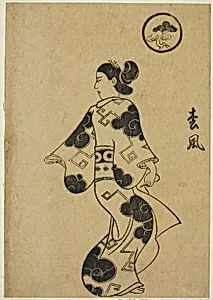
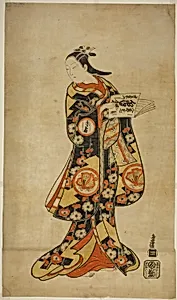
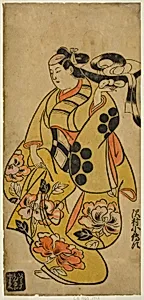
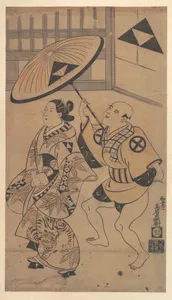
Kiyonobu, alongside his father, founded the Torii school, the sole ukiyo-e lineage to endure into the modern era, renowned for its intimate bond with kabuki theater. Working in the Torii school tradition, he pioneered yakusha-e (actor prints) with a bold, dynamic style—thick, sweeping black lines evoking movement and volume, often dubbed "hyotan ashi mimizu gaki" (gourd-legged centipede scribble) for its tapering vigor that mirrored the rough aragoto drama of kabuki. His early tan-e (hand-colored) prints and illustrations burst with theatrical exuberance, capturing mie poses and expressive faces, while later works grew more graceful in depicting courtesans and sumo wrestlers.
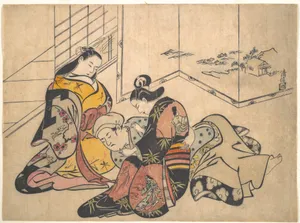
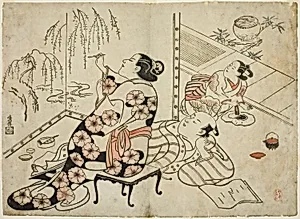
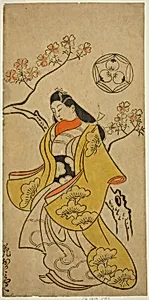
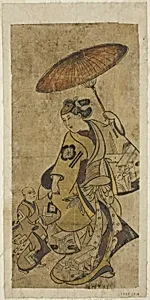
Among his major works, Kiyonobu illustrated the 1693 ehon Kokon shibai iro kurabe hyakkunin isshu and produced actor prints like Sawamura Kodenji I as Tsuyu-no-Mae (1698). By 1700, he created Fūryū yomo byōbu and Keisei ehon (courtesan album), alongside Shōgi gachō and Fūryū shihō byōbu (actor portraits). Other highlights include Yamanaka Heikurō I in roles from c. 1700–1706, Two Courtesans (c. 1703), and Beauty in a Black Kimono (c. 1710–20).
Kiyonobu's legacy endures through the Torii school's dominance in yakusha-e for decades, with his disciples—including likely son Torii Kiyonobu II and Torii Kiyomasu I—perpetuating the lineage's dramatic flair and kabuki ties, even enshrining paintings as votive offerings. His innovative fusion of theater and art not only defined early 18th-century ukiyo-e but also ensured the Torii legacy's survival amid shifting styles.