
2/7
Medium
pen
Dimensions
104; 62
Rights
Public Domain
About this artwork
height 104 mm x width 62 mm
Art Historical Context
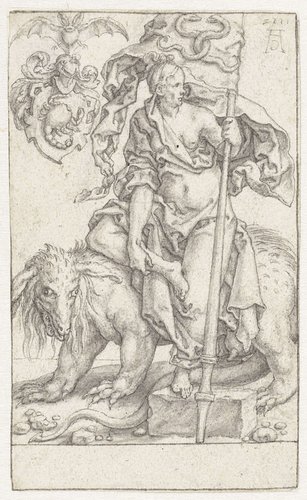
Heinrich Aldegrever, a prominent German engraver and gold of the Northern Renaissance (c. 2–1555/61), created *2/7* in 1552. This intimate pen drawing, measuring just 104 mm high by 62 mm wide, the "Little Masters"—artists renowned for their meticulous work on a diminutive scale. Aldegver, based in Soest, was a key figure in 16th-century printmaking, blending intricate line work with themes drawn from Renaissance humanism, allegory, and everyday life. The use of pen as a medium highlights Aldegrever's mastery of line and contour, a technique essential to his engraving practice. At this compact size, the drawing likely served as a preparatory study or standalone sketch, showcasing the precision valued in Northern European art during the Reformation era. Such works were prized for their portability and detail, often collected by scholars and patrons amid the era's growing interest in naturalism and narrative. *2/7* invites us to appreciate Aldegrever's technical virtuosity up close—imagine peering through a jeweler's loupe at the delicate ink strokes that defined an age of artistic innovation. Though part of a presumed series (as suggested by its numbering), it stands as a testament to the enduring appeal of Renaissance draftsmanship.
About the Artist
Heinrich Aldegrever · 1502–1561
Heinrich Aldegrever, born in 1502 in Paderborn, Westphalia, to parents Herman and Katherine Trippenmeker—a family of clog-makers known by the dialect name Trippenmecker—emerged as a multifaceted artist in the German Renaissance. His early training remains undocumented, though he likely apprenticed in a Soest goldsmith's workshop after relocating there around 1525, where he joined the painters' gui...