
Zeven Hoofdzonden
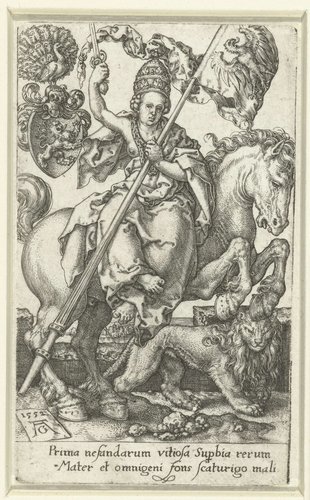
Medium
engraving
Dimensions
102; 62
Rights
Public Domain
About this artwork
height 102 mm x width 62 mm
Art Historical Context
Heinrich Aldegrever's *Zeven Hoofdzonden (Seven Deadly Sins), in 1552, is a exquisite engraving measuring just 102 mm high by 62 mm wide. As one of the renowned "Little Masters" of the Northern Renaissance, Aldegre specialized in intricate small-scale prints from his workshop in Soest, Germany. This compact format allowed for remarkable detail, making his works affordable and widely collectible among the emerging middle class during the 16th century. The reveals a moralistic theme rooted in Christian theology, depicting the seven deadly sins—pride, greed, lust, envy, gluttony, wrath, and sloth—as a cautionary series. Such subjects were immensely popular in Reformation-era Europe, blending didacticism with artistic virtuosity to remind viewers of spiritual perils. Aldegrever's engravings often drew from earlier masters like Albrecht Dürer, adapting their precision to Protestant sensibilities. Engraving technique shines here: fine lines incised into a copper plate capture nuanced expressions and symbolic motifs in miniature. This artwork exemplifies how printmaking democratized high art, circulating moral lessons far beyond elite patrons and influencing popular culture for generations. A true gem for contemplating human frailty!
About the Artist
Heinrich Aldegrever · 1502–1561
Heinrich Aldegrever, born in 1502 in Paderborn, Westphalia, to parents Herman and Katherine Trippenmeker—a family of clog-makers known by the dialect name Trippenmecker—emerged as a multifaceted artist in the German Renaissance. His early training remains undocumented, though he likely apprenticed in a Soest goldsmith's workshop after relocating there around 1525, where he joined the painters' gui...