
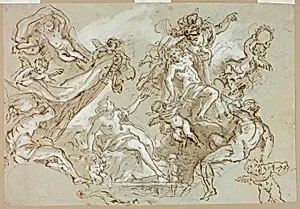
Apotheosis of Hercules (recto); Sketches of Horse's Head, Horse's Forequarters, and Altarpiece or Ciborium (verso)
Medium
Pen and brown ink, with brush and brown wash, heightened with white gouache, over graphite (recto), and black chlalk with pen and ink (verso), on blue-gray laid paper
Dimensions
25.6 × 36.9 cm (10 1/8 × 14 9/16 in.)
Classification
pen and ink drawings
Department
Prints and Drawings
Museum
Art Institute of Chicago
Accession Number
113594
Rights
Public Domain
Art Historical Context
Anton Domenico Gabbiani, a Florentine Baroque artist (1652–1726), crafted this dynamic preparatory drawing, showcasing his mastery in the service of the Medici court. the recto, theApotheosis of Hercules* depicts the hero's divine ascent, a classical myth favored in Baroque art for its themes of triumph and immortality. Rendered in pen and brown ink with brush and brown wash, heightened with white gouache over graphite on blue-gray laid paper, work employs chiaroscuro techniques to create dramatic light and shadow, evoking the grandeur of ceiling frescoes or altarpieces Gabbiani often designed. The verso reveals Gabbiani's versatile studio practice: quick sketches of a horse's head and forequarters in black chalk, alongside a detailed study for an altarpiece or ciborium in pen and ink. These studies highlight the artist's preparatory process, common among 17th- and 18th-century draftsmen, where a single sheet served multiple purposes to refine compositions for larger commissions. Housed in the Art Institute of Chicago's Prints and Drawings department, this 25.6 × 36.9 cm sheet offers a rare glimpse into Gabbiani's workflow, blending mythological spectacle with equestrian realism and sacred architecture—testaments to the Baroque era's fusion of classical antiquity, naturalism, and religious pomp.