
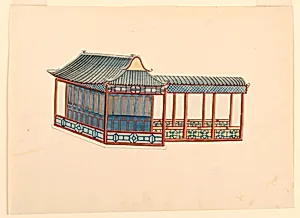
Chinoiserie Pavilion
Classification
architecture
Department
Smithsonian Collection
Museum
Smithsonian American Art Museum
Credit
Museum purchase through gift of Mrs. John Innes Kane
Accession Number
1948-40-86
Rights
Public Domain
About this artwork
Research in Progress
Art Historical Context
Step into the whimsical world of **Chinoiserie Pavilion a captivating architectural work crafted by English designer Frederick Crace (1779–1859) 1815 and 1822. Crace, part of a renowned family of decorators and interior specialists in Regency-era London, specialized in ornate furnishings and exotic motifs. This pavilion exemplifies *chinoiserie*—a fanciful European interpretation of Chinese aesthetics that swept Britain during the late 18th and early 19th centuries, blending pagoda roofs, latticework, and intricate patterns inspired by trade with the East. Created amid the Napoleonic aftermath and growing fascination with Orientalism, the pavilion reflects Britain's imperial curiosity and decorative innovation. Though its exact medium remains under study, its architectural classification highlights Crace's skill in translating two-dimensional designs into immersive structures, possibly for gardens or interiors. Acquired through a museum purchase with funds gifted by Mrs. John Innes Kane, it now graces the Smithsonian American Art Museum's collection. This piece invites visitors to ponder how global exchange fueled artistic fantasy, turning distant cultures into elegant escapism. Ongoing research promises deeper revelations into its techniques and patrons—stay tuned!