
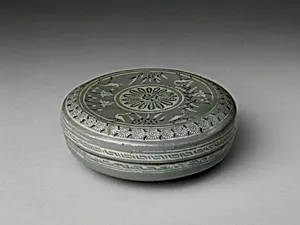
청자 상감 국화 물가 풍경 무늬 합 고려|靑磁 象嵌菊花柳蘆水禽文 盒 高麗|Covered box decorated with chrysanthemums and waterfowl among lotus
Unknown Artist
13th century
Medium
Stoneware with inlaid design under celadon glaze
Dimensions
H. 1 7/8 in. (4.8 cm)
Classification
Ceramics
Culture & Period
Korea · Goryeo dynasty (918–1392)
Department
Asian Art
Museum
Metropolitan Museum of Art, New York, NY
Credit
Gift of Sadajiro Yamanaka, 1911
Accession Number
11.8.5a, b
Rights
Public Domain
Tags
Art Historical Context
This exquisite covered box, created in 13th-century Korea during the Goryeo dynasty, exemplifies the refined elegance of Korean celadon ceramics. Standing just under two inches tall, the stoneware vessel features a delicate inlaid design—known as sanggam—where motifs of chrysanthemums, lotus, and waterfowl were carefully carved into the clay and filled with contrasting slips before the application of the signature jade-green celadon glaze. This technique allowed intricate patterns to appear softly beneath the luminous surface, showcasing the masterful balance of precision and subtlety prized by Goryeo artisans. Such small lidded boxes were likely used to hold cosmetics, incense, or personal treasures for the Goryeo aristocracy. The decorative theme of birds among flowers evokes harmony with nature, a recurring motif in Korean art that reflects Buddhist and Confucian ideals of balance and tranquility prevalent during the period. Goryeo celadons like this one were highly valued even in their own time, often exchanged as diplomatic gifts with China and Japan. Today, this piece resides in the Metropolitan Museum of Art’s Asian Art collection, a gift that highlights the enduring global appreciation for Korea’s ceramic heritage. Its modest scale belies the sophisticated craftsmanship that made Goryeo celadon one of the most celebrated artistic achievements in East Asian history.