
Cup
Unknown Artist
18th century
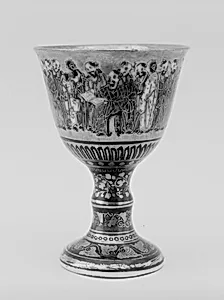
Medium
White porcelain decorated with iron red, gold and black (Hizen ware, Kutani type)
Dimensions
H. 3 7/8 in. (9.8 cm); W. 2 3/4 in. (7 cm)
Classification
Ceramics
Culture & Period
Japan · Edo period (1615–1868)
Department
Asian Art
Museum
Metropolitan Museum of Art, New York, NY
Credit
Purchase by subscription, 1879
Accession Number
79.2.1339
Rights
Public Domain
Tags
Art Historical Context
This exquisite 18th-century cup, crafted during Japan's Edo period (16151868), exemplifies the artistry of Hizen ware a Kutani type. Standing just 3⅞ inches tall and 2¾ inches wide, this petite white porcelain vessel is adorned with vibrant iron-red, gold, and blackels, featuring motifs of men amid flowing leaves. Produced in the Hizen province (modern-day Saga), such wares emerged from Arita kilns, where potters mastered high-fired porcelain prized for its translucency and durability. Hizen porcelain, often called Imari in export form, revolutionized Japanese ceramics by blending Chinese influences with local innovation. The Kutani-type overglaze decoration—applied after firing and refired at lower temperatures—allowed bold, colorful designs that captured the opulent tastes of the Edo era's merchant class and samurai elite. These cups likely served in tea ceremonies or sake rituals, symbols of hospitality and aesthetic harmony. Acquired by the Metropolitan Museum of Art in 1879 through public subscription, this piece highlights early Western fascination with Japanese art during the Meiji opening. Its delicate motifs evoke nature's vitality intertwined with human presence, a timeless nod to Japan's wabi-sabi ethos of beauty in imperfection.