
Dagger (Jambiya) and Sheath
Unknown Artist
19th century
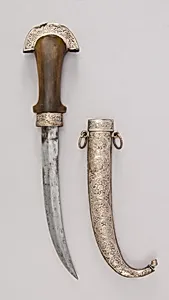
Medium
Steel, wood, silver, horn (rhinoceros)
Dimensions
H. with sheath 14 3/4 in. (37.5 cm); H. without sheath 14 3/4 in. (37.5 cm); H. of blade 9 in. (22.9 cm); W. 3 1/4 in. (8.3 cm); Wt. 10.4 oz. (294.8 g); Wt. of sheath 6 oz. (170.1 g)
Classification
Daggers
Culture
Moroccan
Department
Arms and Armor
Museum
Metropolitan Museum of Art, New York, NY
Credit
Bequest of George C. Stone, 1935
Accession Number
36.25.778a, b
Rights
Public Domain
Art Historical Context
This exquisite Jambiya dagger and sheath, hailing from 19th-century Morocco, exemplifies the masterful craftsmanship of North African arms and armor.ed from steel for the, with a hilt of wood, silver, and rhinoceros horn, the dagger measures 14¾ inches (37.5 cm) with its sheath and weighs a substantial 10.4 ounces (294.8 g) bare. The curved blade, at 9 inches (22.9 cm), and ornate silver inlays reflect both lethal functionality and decorative artistry, making it a prized possession for warriors or elites. In Moroccan culture, the Jambiya served as more than a weapon—it was a symbol of status, masculinity, and heritage, often worn prominently in ceremonial dress or daily attire among Berber and Arab communities. During the 19th century, amid Morocco's turbulent history of tribal conflicts and Ottoman influences, such daggers blended practical defense with opulent materials like rhino horn, prized for its durability and exotic allure, and silver for its gleaming filigree work. Bequeathed to the Metropolitan Museum of Art by George C. Stone in 1935, this piece invites visitors to appreciate the fusion of utility and beauty in Islamic decorative arts, highlighting the skilled anonymous artisans who elevated everyday arms into cultural treasures.