
Dagger (Jambiya) with Sheath
Unknown Artist
18th–19th century
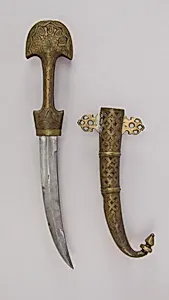
Medium
Steel, silver, brass
Dimensions
H. with sheath 16 in. (40.6 cm); H. without sheath 15 1/4 in. (38.7 cm); W. 2 7/8 in. (7.3 cm); Wt. 11.3 oz. (320.3 g); Wt. of sheath 8.4 oz. (238.1 g)
Classification
Daggers
Culture
Moroccan
Department
Arms and Armor
Museum
Metropolitan Museum of Art, New York, NY
Credit
Bequest of George C. Stone, 1935
Accession Number
36.25.772a, b
Rights
Public Domain
Art Historical Context
This exquisite Moroccan jambiya dagger, dating to the 18th–19th century, exemplifies the artistry of North African arms craftsmanship. Housed in the Metropolitan Museum of Art's and Armor Department, it measures 16 inches (40.6 cm) with its sheath and weighs a substantial 11.3 ounces (320.3 g) without, underscoring its balance and functionality as both weapon and status symbol. The unknown artisan's work highlights the jambiya's iconic curved blade, a hallmark of Moroccan and broader Islamic weaponry traditions. Crafted from steel for the blade, with silver and brass accents on the hilt and sheath, the dagger showcases skilled metalworking techniques like gilding, engraving, or inlay—common in Moroccan arms to denote wealth and prestige. Men of standing often wore jambiyas tucked into sashes, blending utility with ornamental display during a period of Ottoman influence and regional trade. Bequeathed by George C. Stone in 1935, this piece invites visitors to appreciate how everyday objects like daggers became canvases for cultural identity, reflecting Morocco's rich heritage of metallurgy and design.