
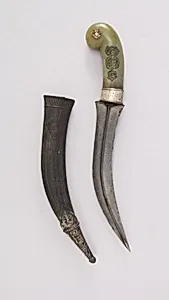
Dagger (Jambiya) with Sheath
Unknown Artist
18th century
Medium
Steel, silver, jade, diamond, gold, leather
Dimensions
H. with sheath 13 7/8 in. (35.2 cm); H. without sheath 12 3/4 in. (32.4 cm); L. of blade 8 1/2 in. (21.6 cm); W. 2 5/8 in. (6.7 cm); Wt. 10.8 oz. (306.2 g); Wt. of sheath 2 oz. (56.7 g)
Classification
Daggers
Culture
Indian
Department
Arms and Armor
Museum
Metropolitan Museum of Art, New York, NY
Credit
Bequest of George C. Stone, 1935
Accession Number
36.25.1051a, b
Rights
Public Domain
Art Historical Context
This exquisite 18th-century Indian, known as a jambiya, exemplifies the lavish craftsmanship of Mughal-era arms and armor. Crafted from steel for the blade, with ornate silver, jade, diamond and gold accents on the hilt and fittings, and a leather sheath, it measures 13⅞ inches with sheath and weighs just over 13 ounces total. Such opulent materials were reserved for nobility, transforming a functional weapon into a symbol of wealth and power. In 18th-century India, under the Mughal Empire's influence, daggers like this jambiya were essential accessories for warriors and elites, often worn at the waist in ceremonial or combat attire. The intricate inlay techniques—likely involving gold and silver damascening on steel—highlight the subcontinent's mastery of metalworking, blending utility with jewelry-like artistry. Jade and diamonds added not just beauty but protective symbolism, warding off evil in cultural beliefs. Today, this piece from the Metropolitan Museum of Art's Arms and Armor collection, bequeathed by George C. Stone in 1935, offers a glimpse into India's rich martial heritage and artistic splendor. Visitors can appreciate how it bridged warfare and adornment in a turbulent yet refined era.