
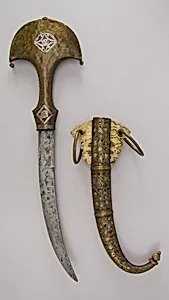
Dagger (Jambiya) with Sheath
Unknown Artist
18th–19th century
Medium
Steel, wood, silver, brass
Dimensions
H. with sheath 23 1/2 in. (59.7 cm); H. without sheath 23 1/4 in. (59.1 cm); H. of blade 13 3/4 in. (34.9 cm); W. 6 1/2 in. (16.5 cm); Wt. 1 lb. 5.7 oz. (615.2 g); Wt. of sheath 1 lb. 9.4 oz. (720.1 g)
Classification
Daggers
Culture
South Moroccan
Department
Arms and Armor
Museum
Metropolitan Museum of Art, New York, NY
Credit
Bequest of George C. Stone, 1935
Accession Number
36.25.775a, b
Rights
Public Domain
Art Historical Context
This exquisite Jambiya dagger with its sheath hails from South Morocco, crafted between the 18th and 19th centuries. Measuring 23½ inches tall with the sheath, it features a sharp steel blade (13¾ inches long) elegantly curved in the traditional jambiya style, with a hilt and sheath adorned in wood, silver, and brass. Weighing just over 2 pounds together, its balanced design speaks to the skilled metalworking of Moroccan artisans, who combined functionality with ornamental flair using techniques like engraving and inlaying precious metals. In South Moroccan culture, the jambiya was more than a weapon—it symbolized status, masculinity, and tribal identity, often worn as part of ceremonial dress by Berber and Arab men. These daggers were essential for self-defense in rugged terrains but also showcased wealth through lavish silverwork and brass fittings, reflecting Islamic artistic traditions that favored geometric patterns and subtle elegance over figurative forms. Now housed in the Metropolitan Museum of Art's Arms and Armor Department, this piece entered the collection through the 1935 bequest of George C. Stone. It offers a window into Morocco's rich martial heritage, blending utility, artistry, and cultural pride.