
Dagger (Khanjarli) with Sheath
Unknown Artist
17th–18th century
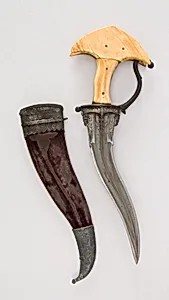
Medium
Steel, ivory (elephant), velvet, silver, wood
Dimensions
H. with sheath 14 11/16 in. (37.3 cm); H. without sheath 13 1/8 in. (33.3 cm); W. 4 5/8 in. (11.7 cm); Wt. 13 oz. (368.5 g); Wt. of sheath 3.4 oz. (96.4 g)
Classification
Daggers
Culture
Indian
Department
Arms and Armor
Museum
Metropolitan Museum of Art, New York, NY
Credit
Bequest of George C. Stone, 1935
Accession Number
36.25.1065a, b
Rights
Public Domain
Art Historical Context
This exquisite *Khanjarli* dagger with sheath, hailing from 17th–18th century India, exemplifies the masterful fusion of form and function in South Asian arms and armor. Crafted by an unknown artisan, its steel blade—curved and broad for thrusting—pairs with an ergonomic hilt likely shaped from elephant ivory, evoking the pistol-grip style favored in Deccani and Mughal courts. Measuring 14 11/16 inches with its sheath, the dagger weighs a balanced 13 ounces, making it both lethal and wieldable in combat. The materials speak to opulent craftsmanship: silver accents and velvet covering on the wooden sheath add regal flair, transforming a weapon into a status symbol for nobility or warriors. Ivory, prized for its durability and carvability, highlights ethical sourcing debates of the era, while steel forging techniques underscore India's renowned metalworking traditions, possibly involving intricate etching or gilding. Bequeathed to the Metropolitan Museum of Art by George C. Stone in 1935, this piece from the Arms and Armor department invites reflection on India's martial heritage, where daggers like the khanjarli bridged utility and artistry during a time of empire and regional power struggles. A true treasure for visitors exploring global weaponry's aesthetic allure.