
Knife (Sekin) with Sheath
Unknown Artist
16th–19th century
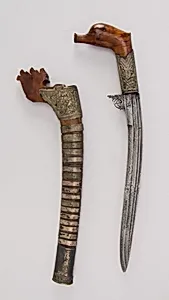
Medium
Wood
Dimensions
H. with sheath 15 11/16 in. (39.8 cm); H. without sheath 14 5/8 in. (37.1 cm); W. 3 5/16 in. (8.4 cm); Wt. 8.1 oz. (229.6 g); Wt. of sheath 5.8 oz. (164.4 g)
Classification
Knives
Culture
Sumatran
Department
Arms and Armor
Museum
Metropolitan Museum of Art, New York, NY
Credit
Bequest of George C. Stone, 1935
Accession Number
36.25.782a, b
Rights
Public Domain
Art Historical Context
This exquisite *Knife (Sekin) with Sheath*, crafted from wood by an unknown Sumatran artisan between the 16th and 19th centuries, exemplifies the functional artistry of Southeast Asian arms and armor. Measuring 15 11/16 inches (39.8 cm) with its sheath and weighing a lightweight 8.1 ounces (229.6 g) for the blade alone, this piece reflects the resourcefulness of Sumatran craftsmen, who often favored wood for its availability and workability in humid tropical environments. Housed in the Metropolitan Museum of Art's Arms and Armor Department, it entered the collection through the 1935 bequest of George C. Stone, a passionate collector of global weaponry. In Sumatran culture, the *sekin* served as both a practical tool and a status symbol, used by ethnic groups for everyday tasks, hunting, or ceremonial purposes. The wooden construction highlights advanced carving techniques, where intricate patterns or ergonomic grips could convey social rank or spiritual beliefs—though specific motifs here remain unrecorded. Its broad blade (3 5/16 inches or 8.4 cm wide) suggests versatility, bridging utility and subtle aesthetic appeal in a region rich with warrior traditions. Visitors will appreciate how this unassuming knife captures Sumatra's pre-colonial ingenuity, blending survival needs with cultural pride during centuries of trade and tribal life. A testament to everyday heroism in wood.