
Daphne odora and Mojisuri-so
19th century
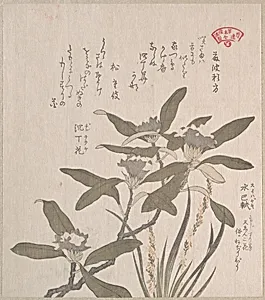
Medium
Part of an album of woodblock prints (surimono); ink and color on paper
Dimensions
8 1/4 x 7 1/4 in. (21 x 18.4 cm)
Classification
Prints
Culture
Japan
Department
Asian Art
Museum
Metropolitan Museum of Art, New York, NY
Credit
H. O. Havemeyer Collection, Bequest of Mrs. H. O. Havemeyer, 1929
Accession Number
JP2316
Rights
Public Domain
Tags
Art Historical Context
Nestled within the H. O. Havemeyer Collection at the Metropolitan Museum of Art *Daphne odora and Mojisuri-so* is a delicate 19th-century woodblock print byo Shunman, a of Japan's ukiyo-e tradition This intimate surimono—part of a luxurious album of privately commissioned prints—measures just 8¼ x 7¼ inches, showcasing Shunman's skill in capturing the ephemeral beauty of nature on paper with vibrant inks and colors. Surimono like this were often produced for elite patrons during festivals or New Year's celebrations, blending artistry with poetry and subtle embossing for a tactile elegance. The print celebrates two evocative plants: Daphne odora, a fragrant winter-blooming shrub symbolizing resilience and subtle allure in Japanese culture, and Mojisuri-so, likely a poetic reference to an orchid-like herb with leaf markings resembling written characters, evoking themes of nature's hidden scripts. Shunman's precise lines and layered colors highlight the intricate textures of leaves and petals, reflecting the Edo-period fascination with seasonal flora (kawazu cherry or hatsuhana motifs) and the wabi-sabi aesthetic of imperfection and transience. As a highlight of Asian Art prints, this work invites visitors to appreciate how woodblock techniques democratized beauty for connoisseurs, bridging everyday wonder with refined craftsmanship. A blooming testament to Japan's artistic heritage!
About the Artist
Kubo Shunman · 1757–1820
Japanese, 1757–1820