
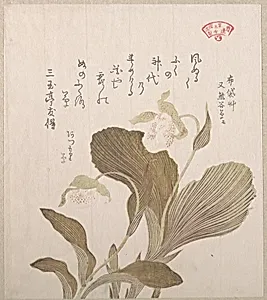
Hotei Flowers
19th century
Medium
Part of an album of woodblock prints (surimono); ink and color on paper
Dimensions
8 1/4 x 7 1/4 in. (21 x 18.4 cm)
Classification
Prints
Culture
Japan
Department
Asian Art
Museum
Metropolitan Museum of Art, New York, NY
Credit
H. O. Havemeyer Collection, Bequest of Mrs. H. O. Havemeyer, 1929
Accession Number
JP2313
Rights
Public Domain
Tags
Art Historical Context
**Hotei Flowers** by Kubo Shunman a masterful 19th Japanese woodblock print, captures the joyful spirit of Hotei—one of the Seven Lucky Gods revered in Japanese folklore for bringing fortune and contentment. Created as part of a *surimono* album, this intimate work (8¼ x 7¼ in.) features vibrant ink and color on paper blooming with flowers and leaves that evoke abundance and seasonal beauty. Shunman, a versatile ukiyo-e artist the late Edo period, whimsy with refined technique in these privately commissioned prints, often made for New Year's greetings or celebrations among poetry circles. Surimono like this one stand out for their luxurious production: small editions allowed for premium pigments, subtle gradations (*bokashi*), and sometimes metallic accents, making them treasured keepsakes rather than mass reproductions. In Shunman's hands, the delicate floral motifs and Hotei's plump, laughing figure highlight the era's fascination with auspicious symbols, reflecting Japan's vibrant urban culture amid political stability. Housed in the Metropolitan Museum of Art's H. O. Havemeyer Collection, this print exemplifies the poetic elegance of Japanese art, inviting viewers to ponder prosperity's simple joys. A perfect gem for contemplating nature's bounty through an artist's eye! (198 words)
About the Artist
Kubo Shunman · 1757–1820
Japanese, 1757–1820