
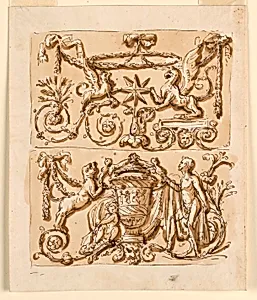
Design for ceiling decoration
1746–1809
Classification
interiors
Department
Smithsonian Collection
Museum
Smithsonian American Art Museum
Credit
Museum purchase through gift of various donors and from Eleanor G. Hewitt Fund
Accession Number
1938-88-1883
Rights
Public Domain
About this artwork
Research in Progress
Art Historical Context
Giuseppe Barberi (1746–1809), a prominent Italian architect and designer in Rome during the late 18th, created this *Design for Ceiling Decoration* amid the transition from opulent Rococo to the refined elegance of Neoclassicism. Working in an era when grand interiors symbolized wealth and cultural sophistication, Barberi specialized in architectural ornamentation, contributing to palazzos and public spaces that blended classical motifs with innovative flair. This preparatory design exemplifies his expertise in crafting harmonious ceiling schemes, where intricate patterns and proportions drew inspiration from ancient Roman precedents revived during the Enlightenment. As a study for interior decoration, the work highlights the meticulous planning behind 18th-century European interiors, where ceilings served as dramatic canvases for illusionistic effects and symbolic narratives. Barberi's designs often featured symmetrical arabesques, medallions, and sculptural elements, influencing the decorative arts across Italy and beyond. Though the medium remains unidentified—likely pen and ink, watercolor, or gouache on paper—this piece underscores the collaborative process between architects and artisans in realizing lavish spaces. Acquired through museum purchase with gifts from various donors and the Eleanor G. Hewitt Fund, it now resides in the Smithsonian American Art Museum's collection, classified under interiors. As research continues, this artifact offers visitors a glimpse into the artistry that crowned Europe's gilded age.