
Finger Rings
Unknown Artist
4th–7th century
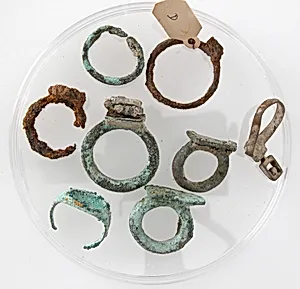
Medium
Copper alloy, iron
Dimensions
Storage (petri dish diam): 3 9/16 in. (9.1 cm)
Classification
Metalwork
Culture
Coptic
Department
Medieval Art
Museum
Metropolitan Museum of Art, New York, NY
Credit
Rogers Fund, 1925
Accession Number
25.10.20.74a-h
Rights
Public Domain
Tags
Art Historical Context
Nestled in the Metropolitan Museum of Art's Medieval Art collection, this assortment of *Finger Rings* hails from Coptic Egypt, dating to the 4th–7th century—a pivotal era when Christianity flourished amid lingering pharaonic traditions. Crafted by an unknown artisan from humble copper alloy and iron, these small treasures (stored in a 9.1 cm petri dish) exemplify everyday metalwork from a vibrant culture blending Egyptian, Greco-Roman, and early Christian influences. Coptic society, centered in monasteries and urban centers like Alexandria, produced such jewelry for personal adornment, betrothals, or protective amulets, reflecting the daily lives of farmers, merchants, and pilgrims. The rings' materials highlight practical artistry: copper alloy offered malleability for intricate shaping, while iron added durability for wear. This metalwork technique underscores Coptic ingenuity in recycling and alloying metals, techniques rooted in ancient Egyptian metallurgy but adapted for a Christian world. Though modest in scale, these artifacts illuminate social customs—rings often symbolized commitment or status—and the resilience of Coptic identity before the Arab conquest in the 7th century. A Rogers Fund acquisition from 1925, they invite us to ponder the intimate stories etched in enduring metal.