
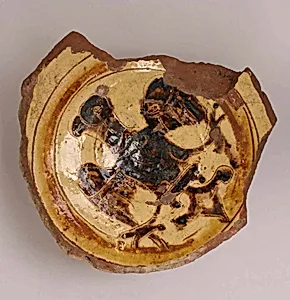
Fragment of a Bowl
Unknown Artist
14th century
Medium
Stonepaste; painted under transparent glaze
Classification
Ceramics
Department
Islamic Art
Museum
Metropolitan Museum of Art, New York, NY
Credit
Gift of Nelly, Violet and Elie Abemayor, in memory of Michel Abemayor, 1978
Accession Number
1978.546.8
Rights
Public Domain
Art Historical Context
This exquisite fragment of a bowl hails from the 14th century a golden age of Islamic ceramics production in regions like Syria and Iran. Though only a piece survives, it offers a glimpse into the sophisticated artistry of the medieval Islamic world, where pottery was both a daily necessity and a canvas for intricate designs. Housed in the Metropolitan Museum of Art's Department of Islamic Art, it was generously gifted in 1978 Nelly, Violet, Elie Abemayor memory of Michel Abemor. Crafted from stonepaste—a composite of quartz, clay, and frit (ground glass)—the bowl exemplifies an innovative Islamic technique developed to mimic the prized translucent porcelain of China, achievable at lower firing temperatures. Artists painted vibrant motifs directly onto the unfired body, then coated it with a transparent glaze before final firing. This underglaze method ensured colors remained vivid and durable, often featuring floral patterns, calligraphy, or geometric motifs symbolizing paradise gardens or spiritual themes. Such ceramics highlight the cultural crossroads of the Silk Road era, blending technical prowess with aesthetic elegance. They adorned tables of merchants and rulers alike, reflecting Islam's emphasis on beauty in everyday life and its profound influence on global ceramic traditions.