
Ginbai
1823
Medium
nishikie, with metallic pigments, blindprinting and tsuyazuri
Dimensions
205; 184
Rights
Public Domain
About this artwork
blad: hoogte 205 mm (shikishiban) x breedte 184 mm
Art Historical Context
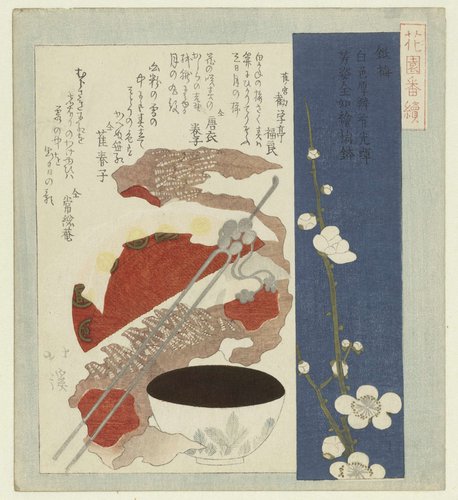
**Ginbai** is a exquisite *nishikie* (brocade print) by Totoya Hokkei, prominent ukiyo-e artist and pupil of the legendary Katsushika Hokusai, created in 1823 during Japan's Edo period. Measuring 205 mm high by 184 mm wide in the compact *shikishiban* format—a square-ish size ideal for intimate, custom commissions known as *surimono*—this print exemplifies the refined artistry of woodblock printing at its peak. Hokkei, active in Edo (modern Tokyo), specialized in nature studies, landscapes, and still lifes, blending poetic observation with technical innovation. What sets *Ginbai* apart are its luxurious techniques: metallic pigments that catch the light like shimmering silk, blindprinting (*gauffrage*) for subtle embossed textures, and *tsuyazuri* for glossy, lacquer-like highlights. These methods elevated *nishikie* from mere illustration to tactile luxury, often reserved for New Year's greetings or poetry albums shared among literati. The *shikishiban* format encouraged collectors to appreciate fine details up close, reflecting ukiyo-e's cultural role in democratizing beauty amid Japan's vibrant urban life. This small gem captures the era's fascination with fleeting elegance, inviting viewers to savor its sparkle and depth—a perfect window into 19th-century Japanese printmaking mastery.
About the Artist
Totoya Hokkei · 1780–1850
Totoya Hokkei (魚屋 北渓, 1780–1850), born Iwakubo Tatsuyuki in Edo (modern Tokyo), began his life as a humble fishmonger in the Yotsuya Samegahashi district, a trade reflected in his art name "Totoya," meaning fish shop. He transitioned to art through rigorous training, first studying under Kanō Yōsen'in Korenobu, head of the Kobikichō branch of the prestigious Kanō school, where he honed landscape p...