
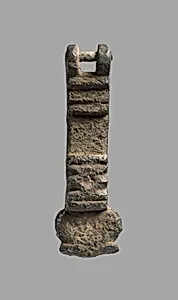
Handle of Aegis?
Unknown Artist
664–30 B.C.
Medium
Bronze or cupreous alloy
Dimensions
H. 6.3 × W. 2 × D. 1.1 cm (2 1/2 × 13/16 × 7/16 in.)
Classification
Handle of Aegis?
Period
Late Period–Ptolemaic Period
Department
Egyptian Art
Museum
Metropolitan Museum of Art, New York, NY
Credit
Gift of Joseph W. Drexel, 1889
Accession Number
89.2.617
Rights
Public Domain
Art Historical Context
This delicate bronze handle, tentatively identified as part of an *aegis*, hails from Egypt's Late Period to Ptolemaic era (664–30 B.C.), a time when native pharaonic traditions blended with Greek influences under Ptolemaic rule. Measuring just 6.3 cm high, this small cupreous alloy object—likely a component of a larger ritual accessory—was crafted with precision, showcasing the era's advanced metalworking skills. Donated to the Metropolitan Museum of Art in 1889 by Joseph W.el, it offers a glimpse into everyday sacred artifacts. In ancient Egyptian culture, the *aegis* was a powerful protective emblem, often a broad collar or pendant featuring the fierce head of a goddess like Bastet or Mut, symbolizing divine safeguarding and royal authority. Handles like this one would have secured such devices to sistrums (rattles used in temple rituals) or furniture, invoking the deity's apotropaic (warding-off-evil) powers during ceremonies. The tentative title reflects scholarly caution, but its form aligns with these sacred functions. Bronze, a durable copper alloy, was prized for its golden sheen and resistance to wear, making it ideal for ritual objects that endured temple use or processions. This piece highlights the continuity of Egyptian artistry amid political upheaval, reminding us how even humble handles carried profound spiritual weight.