
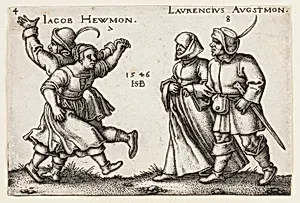
July and August
Classification
figures
Department
Smithsonian Collection
Museum
Smithsonian American Art Museum
Credit
Gift of Leo Wallerstein
Accession Number
1950-131-72
Rights
Public Domain
About this artwork
Research in Progress
Art Historical Context
Hans Sebald Beham1500–1550), a masterful German engraver and painter Nuremberg, created *July and August* in 1546 during the height of the Northern Renaissance. one of the "Little," Beham specialized in intricate, small-scale works that captured everyday life, allegories, and seasonal themes with remarkable precision. This piece, classified among figures, likely evokes the rhythms of summer through human forms engaged in harvest or labors typical of July and August, reflecting the era's fascination with calendars and the peasant calendar tradition. Beham's style, influenced by Albrecht Dürer, emphasized fine lines, expressive details, and a blend of realism and symbolism amid the Protestant Reformation's cultural shifts in Germany. His expulsion from Nuremberg in 1524 for iconoclastic views adds intrigue, highlighting tensions between art, faith, and humanism. Though the medium remains unidentified amid ongoing research, the work exemplifies his skill in portraying relatable human narratives. A generous gift from Leo Wallerstein, *July and August* graces the Smithsonian American Art Museum's collection, inviting visitors to ponder Renaissance life's cyclical joys and toils. (198 words)