
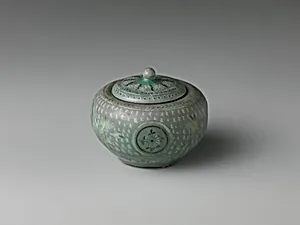
청자 상감 금채 국화 무늬 작은 항아리 고려|靑磁象嵌金彩菊花文小壺 高麗|Small jar and cover decorated with chrysanthemums, cranes, and clouds
Unknown Artist
late 13th century
Medium
Stoneware with gold and inlaid design under celadon glaze
Dimensions
H. 2 1/2 in. (6.4 cm)
Classification
Ceramics
Culture & Period
Korea · Goryeo dynasty (918–1392)
Department
Asian Art
Museum
Metropolitan Museum of Art, New York, NY
Credit
Gift of Sadajiro Yamanaka, 1911
Accession Number
11.8.4
Rights
Public Domain
Art Historical Context
This exquisite small jar and cover from Korea's Goryeo dynasty (918–1392), dating to the late 13th century, exemplifies the pinnacle of celadon ceramic artistry. Standing just 2½ inches tall, its compact form was likely designed for intimate uses like holding cosmetics, spices, or precious inks. Adorned with delicate motifs of chrysanthemums, cranes, and swirling clouds inlaid with white slip and accented by gold under a luminous celadon glaze, the piece radiates elegance and harmony. Goryeo celadon, prized across East Asia, achieved its signature jade-green hue through iron-rich glazes fired in dragon kilns. The sanggam (inlaid) technique—carving designs into the clay body, filling them with white slip, and refiring—created striking contrasts beneath the translucent glaze, a innovation unique to Korean potters. Gold detailing added a luxurious shimmer, reflecting the dynasty's wealth from Buddhist patronage and maritime trade. Symbolically, chrysanthemums evoke autumn's longevity, while cranes and clouds suggest immortality and the heavens, tying into Goryeo's Buddhist worldview. A gift to the Metropolitan Museum of Art in 1911, this rare survivor invites us to marvel at the era's masterful blend of technical virtuosity and poetic grace.