
Peacocks and Peonies I
1882
Medium
Decorative Arts-Glass
Classification
Decorative Arts-Glass
Department
Smithsonian Collection
Museum
Smithsonian American Art Museum
Credit
Smithsonian American Art Museum, Gift of Henry A. La Farge
Accession Number
1936.12.1
Rights
Public Domain
Tags
About this artwork
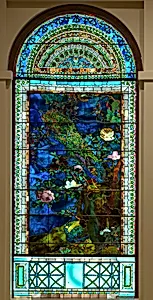
La Farge's stained-glass windows reflect the Gilded Age fascination with medieval art and craftsmanship. The industrial revolution had made inexpensive, mass-produced glass available to anyone, but art glass remained an emblem of wealth and good taste. These windows were commissioned by Frederick Lothrop Ames, a railroad magnate who had them installed in the vast, baronial hall of his Boston house.
Art Historical Context
Step into the opulent world of the Gilded Age with *Peacocks and Peonies*, a stunning stained-glass window created by John Laarge in 1882. Now part of the Smithsonian American Art Museum's collection, this piece exemplifies the revival of medieval-inspired craftsmanship during America's industrial boom. La Farge, a pioneering American artist, captured the luxurious motifs of peacocks—symbols of beauty and immortality—and blooming peonies, evoking prosperity and elegance, in vibrant glass that dances with light. Commissioned by railroad magnate Frederick Lothrop Ames, the window graced the grand baronial hall of his Boston mansion. Amid the Industrial Revolution's flood of cheap, mass-produced glass, such "art glass" stood as a badge of wealth and refined taste. La Farge's design harks back to Gothic cathedrals, blending historic reverence with modern innovation to transform everyday spaces into jewel-like sanctuaries. Today, this masterpiece invites us to appreciate how decorative arts bridged old-world artistry and new-world ambition, reminding visitors of glass's timeless power to illuminate both rooms and histories. (198 words)
About the Artist
John La Farge · 1835–1910
John La Farge (1835–1910) was born into a wealthy French émigré family in New York City, the son of John Frederick La Farge and Louisa Binsse de Saint-Victor. Educated at Jesuit institutions including Mount St. Mary's College in Maryland and St. John's College (now Fordham University), he initially pursued law but turned to art after receiving early drawing lessons from his maternal grandfather, a...