
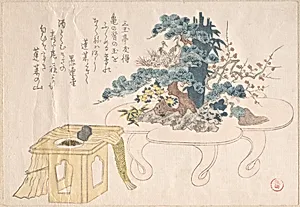
Shimadai and Sambo
19th century
Medium
Woodblock print (surimono); ink and color on paper
Dimensions
5 3/8 x 7 3/4 in. (13.7 x 19.7 cm)
Classification
Prints
Culture
Japan
Department
Asian Art
Museum
Metropolitan Museum of Art, New York, NY
Credit
H. O. Havemeyer Collection, Bequest of Mrs. H. O. Havemeyer, 1929
Accession Number
JP2148
Rights
Public Domain
Tags
Art Historical Context
"Shimadai and S" is a delicate 19th-century woodblock by Kubo Shunman, a master of the ukiyo-e tradition known for his exquisite surim—privately commissioned prints often created for special occasions like New Year's celebrations. Produced in Japan during the Edo period, this intimate work measures just 5 3/8 x 7 3/4 inches, showcasing the refined artistry of surimono with its vibrant inks, subtle colors, and precise registration on paper. Shunman's style blends poetic elegance with naturalistic detail, elevating everyday subjects into celebrations of beauty. The print likely depicts shimadai (striped beakfish) and sambo (another sea bream variety) arranged on a table amid blooming flowers, a motif reflecting Japan's deep cultural reverence for seasonal nature and the ephemeral beauty of life, as inspired by wabi-sabi aesthetics. Woodblock printing techniques allowed for luxurious effects like mica dusting or embossing, making surimono prized collector's items that combined visual splendor with inscribed kyōka poems (though not visible here). Part of the Metropolitan Museum of Art's H. O. Havemeyer Collection, this piece highlights the global appreciation of Japanese prints in the West. Visitors will appreciate its serene composition, inviting contemplation of harmony between sea bounty and floral splendor in everyday still life.
About the Artist
Kubo Shunman · 1757–1820
Japanese, 1757–1820