
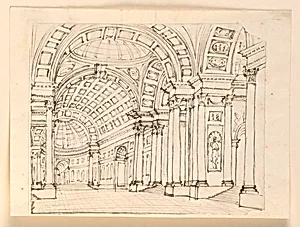
Stage Design, Palace Interior
early 19th century
Classification
theater
Department
Smithsonian Collection
Museum
Smithsonian American Art Museum
Credit
Museum purchase through gift of various donors and from Eleanor G. Hewitt Fund
Accession Number
1938-88-225-1
Rights
Public Domain
About this artwork
Research in Progress
Art Historical Context
Step into the grandeur of an early 19th-century theater *Stage Design, Palace Interior a captivating artifact from the Smithsonian American Art's collection. Created by an unknown artist around 1800–1830, this design captures the opulent world of stage scenery, evoking lavish palaces through intricate architectural details and dramatic spatial illusions. Acquired through museum purchase with gifts from various donors and the Eleanor G Hewitt Fund, it belongs to the Smithsonian's theater, highlighting the artistry behind live performances. In the early 1800s, American and European theaters were evolving rapidly, with stage designs playing a pivotal role in immersing audiences in fantastical realms. These works transformed wooden stages into believable palaces, using perspective tricks and symmetrical compositions to mimic real interiors—think soaring columns, gilded arches, and chandelier-lit halls. Such designs supported popular plays, ballets, and operas that romanticized royalty and history, reflecting a cultural fascination with neoclassical elegance amid America's growing entertainment scene. Though research continues on its exact origins and medium, this piece underscores the unsung craft of theatrical designers, whose ephemeral creations brought stories to life. It invites us to appreciate how visual spectacle shaped early modern theater, bridging art and performance in ways that still echo today.
About the Artist
Unknown
The artist designated as "Unknown" in our virtual museum's collection exemplifies a poignant chapter in art history: creators whose identities have faded into obscurity despite the enduring power of their work. With only one known artwork attributed to them in our holdings, this figure represents countless anonymous hands that shaped visual culture across centuries. Museums worldwide, including th...