
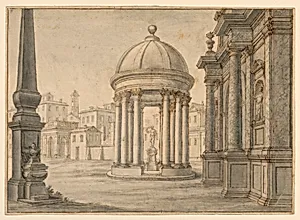
Stage Design: Town Archit
ca. 1740
Classification
theater
Department
Smithsonian Collection
Museum
Smithsonian American Art Museum
Credit
Museum purchase through gift of various donors and from Eleanor G. Hewitt Fund
Accession Number
1938-88-72
Rights
Public Domain
About this artwork
Research in Progress
Art Historical Context
This exquisite stage design, titled *Stage Design: Town Arch*, hails from the Bibiena Family, a dynasty of Italian architects and scenic artists active in the 17th and 18th centuries. Dated around 1740, it exemplifies their mastery in creating illusory theatrical environments, likely depicting a grand town architecture scene for opera or dramatic performances. Housed in the Smithsonian American Art Museum's theater collection, this work was acquired through museum purchase, reflecting its enduring value. The Bibienas revolutionized stagecraft during the Baroque era, pioneering techniques like *scena per angolo*—an angled perspective that drew audiences into breathtaking depth and grandeur. Though the medium remains unidentified amid ongoing research, such designs were typically rendered in gouache or watercolor on paper, allowing for luminous effects that mimicked architecture under footlights. These innovations transformed European theaters, influencing productions from Vienna to Versailles. For visitors, this piece offers a window into the magic of 18th-century spectacle, where painted illusions rivaled reality. Its presence in the Smithsonian underscores the cross-cultural exchange of artistic ideas, blending Italian ingenuity with global appreciation.