
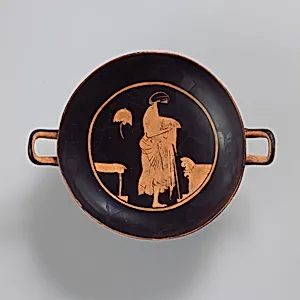
Terracotta kylix (drinking cup)
ca. 500–490 BCE
Medium
Terracotta
Dimensions
H. 3 7/16 in. (8.7 cm); diameter 8 in. (20.3 cm)
Classification
Vases
Culture & Period
Greek, Attic · Archaic
Department
Greek and Roman Art
Museum
Metropolitan Museum of Art, New York, NY
Credit
Rogers Fund, 1918
Accession Number
18.145.28
Rights
Public Domain
Tags
Art Historical Context
This elegant terracotta kylix, or drinking cup, was crafted in Athens around 500–490 BCE during the Archaic period of ancient Greece. Created by the vase painter Apollodoros, it exemplifies the refined artistry of Attic pottery workshops, where functional objects were transformed into vehicles for storytelling and beauty. The cup’s modest scale—roughly eight inches across—made it ideal for use at symposia, the lively social gatherings where Athenian men shared wine, conversation, and cultural exchange. Decorated with human figures, the kylix reflects the Archaic interest in depicting the human form with increasing naturalism and expressive detail. Terracotta, the most common medium for Greek vases, allowed artists like Apollodoros to achieve both durability for everyday use and a smooth surface suited to fine painting. Such vessels bridged the practical and the artistic, carrying scenes of daily life or myth into the hands of their owners. Today in the Metropolitan Museum’s Greek and Roman collection, this work offers visitors a direct connection to the social rituals and artistic innovations of early fifth-century Athens. Its survival highlights the enduring value placed on craftsmanship that elevated ordinary moments into occasions of aesthetic pleasure.
About the Artist
Apollodoros
**Apollodoros** was an Attic vase-painter active in Athens around 500 BCE, during the formative years of the red-figure technique. He specialized in decorating drinking cups (kylikes), a format that allowed for intimate, detailed scenes often featuring mythological figures, athletes, or komos revelers. Like many of his contemporaries, he worked within the vibrant Athenian pottery workshops that su...