
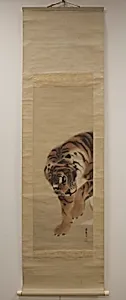
Tiger
dated 1790
Medium
Hanging scroll; ink and color on silk
Dimensions
38 3/4 x 13 3/4 in. (98.4 x 34.9 cm)
Classification
Paintings
Culture & Period
Japan · Edo period (1615–1868)
Department
Asian Art
Museum
Metropolitan Museum of Art, New York, NY
Credit
Charles Stewart Smith Collection, Gift of Mrs. Charles Stewart Smith, Charles Stewart Smith Jr., and Howard Caswell Smith, in memory of Charles Stewart Smith, 1914
Accession Number
14.76.21
Rights
Public Domain
Tags
Art Historical Context
Behold the majestic *Tiger* by Kishi Ganku, a hanging scroll painted in ink and color on silk in 1790. Measuring 38 3/4 x 13 3/4 inches, this Edo-period masterpiece (1615–1868) the fierce grace of its titular subject with striking realism and vitality. Ganku, a renowned Japanese artist, specialized in animal paintings, particularly tigers, blending meticulous Chinese-inspired techniques with Japanese sensitivity to bring wildlife to life on luxurious silk. During Japan's Edo era—a time of relative peace and cultural flourishing—this work exemplifies the literati painting tradition, or *nanga*, which emphasized expressive brushwork over rigid realism. The use of ink for dynamic fur textures and subtle colors for muscular form highlights Ganku's mastery, evoking the tiger's power as a symbol of strength and ferocity in East Asian lore. Hanging scrolls like this were cherished for seasonal display in homes or temples, unfolding moments of contemplation. Now part of the Metropolitan Museum of Art's Asian Art collection, gifted in 1914 from the Charles Stewart Smith family, *Tiger* invites visitors to ponder nature's raw energy through Ganku's masterful gaze. A timeless emblem of Edo artistry, it roars across centuries.