
Tile
Unknown Artist
13th century
Medium
Stonepaste; painted under transparent glaze
Classification
Ceramics-Tiles
Department
Islamic Art
Museum
Metropolitan Museum of Art, New York, NY
Credit
Bequest of Agnes Miles Carpenter, 1958
Accession Number
58.90.3
Rights
Public Domain
Tags
Art Historical Context
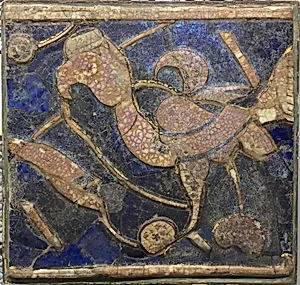
This exquisite 13th-century tile crafted by an unknown artist, exemplifies the refined artistry of Islamic ceramics. Made from stonepaste—a composite of quartz, clay, and glass frit—painted under a transparent glaze it features delicate bird motifs that evoke the natural world. Housed in the Metropolitan Museum of Art's Islamic department as part of the 1958 bequest of Agnes Miles Carpenter, this once likely adorned a mosque, palace, or madrasa, where such panels created shimmering walls of color and pattern. Stonepaste, developed in the Islamic world around the 10th century, was prized for its ability to imitate Chinese porcelain while enabling intricate underglaze designs that withstood time and weather. The transparent glaze seals the vibrant pigments, preserving the artwork's luminosity even after centuries. This technique reached its zenith in the 13th century, amid cultural flourishing in regions like Persia and Syria. Birds in Islamic art often symbolize paradise gardens from the Quran, fluttering amid floral arabesques as emblems of spiritual harmony and earthly beauty. This tile invites visitors to ponder the anonymous craftsmen's skill, blending technical innovation with profound cultural symbolism in everyday architectural splendor.