
Hexagonal Tile
Unknown Artist
first half 15th century
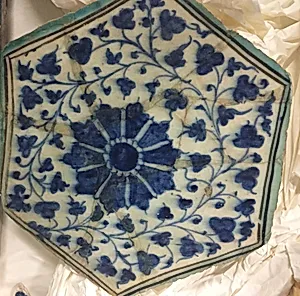
Medium
Stonepaste; painted under transparent glaze
Classification
Ceramics-Tiles
Department
Islamic Art
Museum
Metropolitan Museum of Art, New York, NY
Credit
Gift of Marilyn Jenkins, in memory of her father, Dr. Arthur M. Jenkins, 1982
Accession Number
1982.478.1
Rights
Public Domain
Tags
Art Historical Context
This exquisite hexagonal tile, crafted in the first half of the th century, hails from the vibrant world of Islamic art, where ceramics adorned mosques, palaces, and madrasas across the Middle East. Produced during the Timurid or Mamluk eras, such tiles were integral to lavish architectural ensembles, creating shimmering walls that evoked paradise gardens. Donated to the Metropolitan Museum of Art 1982 by Marilyn Jenkins in memory of her, Dr. Arthur M. Jenkins, this piece exemplifies the era's mastery in transforming humble clay into luminous decoration. Made of stonepaste—a composite of quartz, clay, and frit fired at high temperatures—the tile's surface was painted with pigments under a transparent glaze before a final firing. This underglaze technique ensured vibrant, durable colors that resisted fading, a hallmark innovation in Islamic ceramics that allowed for intricate designs to shine through centuries. The floral motifs, likely blooming lotus or arabesque patterns, symbolize renewal and divine beauty, reflecting Islamic artistic traditions that favored stylized nature over figurative representation. As a single survivor from a larger mihrab or panel, this tile invites us to imagine the hypnotic mosaics of medieval Islamic courts, blending technical prowess with spiritual elegance.