
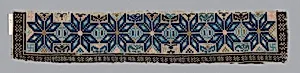
Trouser Band
Qing dynasty (1644–1911), 1875/1900
Medium
Forty-four pairs and eight odd pieces of embroidered sleeve, ankle bands, etc. on gauze.
Dimensions
6.3 × 32.8 cm (2 1/2 × 12 7/8 in.)
Classification
textile
Department
Textiles
Museum
Art Institute of Chicago
Accession Number
156142
Rights
Public Domain
Art Historical Context
Discover the delicate artistry of the Qing dynasty in *Trouser Band*, a textile masterpiece crafted by Han Chinese artisans around 1875–1900. This intimate work, housed in the Art of Chicago's Textiles Department, consists of forty-four pairs and eight individual pieces of embroidered sleeve bands ankle bands, and similar trims mounted on gossamer-thin gauze. Measuring just 6.3 × 32.8 cm, it exemplifies the refined craftsmanship of late imperial China, when such accessories adorned trousers, sleeves, and robes, blending functionality with opulent decoration. Qing textiles were celebrated for their technical virtuosity, particularly embroidery on lightweight gauze—a sheer silk fabric prized for its breathability and elegance in humid climates. These bands likely secured garments while showcasing intricate needlework, a hallmark of Han Chinese textile traditions under Manchu rule. Embroidery served not only aesthetic purposes but also cultural ones, symbolizing prosperity, harmony, and social status in everyday and ceremonial wear. This preserved ensemble offers a window into the daily lives of Qing elites and commoners alike, highlighting the era's fusion of utility and beauty. Visitors will appreciate how such modest pieces reveal the meticulous skill that defined Chinese textile innovation for centuries.
About the Artist
Han-Chinese
**Han-Chinese** was the collective attribution given to anonymous artisans of Han Chinese descent who crafted intricate embroidered textiles during the Qing dynasty (1644–1911). These makers, active primarily in the late 18th to early 20th centuries, specialized in luxurious garments and furnishings that showcased the pinnacle of Han Chinese needlework traditions. Their early lives and individual ...