
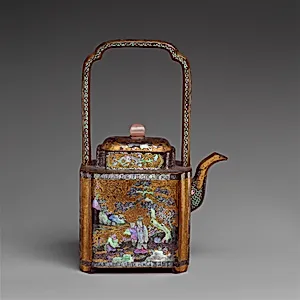
清 嵌螺鈿山水人物圖鑞壺|Wine pot with figures in a landscape
Unknown Artist
18th century
Medium
Gold lacquer over pewter, inlaid with mother-of-pearl
Dimensions
H. (incl. handle) 7 1/2 in. (19.1 cm); W. 2 3/8 in. (6 cm)
Classification
Lacquer
Culture & Period
China · Qing dynasty (1644–1911)
Department
Asian Art
Museum
Metropolitan Museum of Art, New York, NY
Credit
H. O. Havemeyer Collection, Bequest of Mrs. H. O. Havemeyer, 1929
Accession Number
29.100.680a, b
Rights
Public Domain
Tags
Art Historical Context
This exquisite wine pot from China's Qing dynasty (16441911), crafted in 18th century, a delicate landscape scene adorned with human figures and trees. Titled *Wine Pot with Figures in a Landscape*, its compact form—standing just 7½ inches tall including the handle—makes it a perfect example of functional art designed for elite banquets. The intricate design evokes the serene beauty of traditional Chinese painting, where scholars and travelers wander misty mountains and lush groves, capturing the harmony between humanity and nature so revered in imperial culture. The pot's medium is a marvel of Qing lacquer artistry: gold lacquer applied over a pewter body, richly inlaid with shimmering mother-of-pearl (known as *luodian* or shell inlay). This technique, perfected over centuries, creates a luminous, iridescent effect that catches the light like pearls underwater, highlighting the object's luxury status. Pewter provided a sturdy yet lightweight base, allowing for fine detailing that would have required immense skill from anonymous workshops in regions like Yangzhou or Guangzhou. Housed in the Metropolitan Museum of Art's Asian Art Department as part of the renowned H. O. Havemeyer Collection (bequeathed in 1929), this piece reflects the Qing era's opulent decorative arts, blending utility with aesthetic splendor. Visitors can appreciate how such vessels embodied refinement and connoisseurship among the scholar-gentry.