
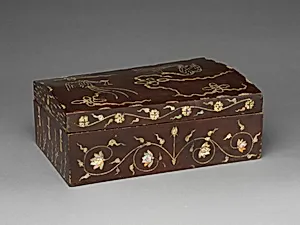
나전 칠 봉황 꽃 벌레 무늬 상자 조선|螺鈿漆 鳳凰花蟲文 箱子 朝鮮|Box decorated with phoenixes, floral scrolls, and insects
Unknown Artist
19th century
Medium
Lacquer inlaid with mother-of-pearl
Dimensions
H. 6 3/8 in. (16.2 cm); W. 11 in. (27.9 cm); L. 16 1/8 in. (41 cm)
Classification
Lacquer
Culture & Period
Korea · Joseon dynasty (1392–1910)
Department
Asian Art
Museum
Metropolitan Museum of Art, New York, NY
Credit
Rogers Fund, 1912
Accession Number
12.134.42a, b
Rights
Public Domain
Tags
Art Historical Context
This exquisite lacquer box from 19th-century Joseon Korea (1392–1910) showcases the pinnacle of Korean decorative arts. Measuring 6⅜ × 11 × 16⅛ inches, it served as a practical yet luxurious storage vessel, likely for cosmetics, jewelry, or scholarly items among the elite. Acquired by the Metropolitan Museum of Art in 1912 through the Rogers Fund, it exemplifies the refined craftsmanship of the Joseon, a period marked by Confucian values emphasizing harmony, nature, and moral virtue. The box is crafted in lacquer inlaid with mother-of-pearl (najeon chil), a technique where thin shell slices are meticulously cut, shaped, and embedded into black lacquer layers, then polished to reveal a shimmering, iridescent glow. This labor-intensive method, perfected in Korea, creates a luminous effect that mimics moonlight on water, symbolizing purity and eternity. Adorning its surfaces are phoenixes—auspicious birds representing imperial power, prosperity, and rebirth—intertwined with floral scrolls and insects, evoking the beauty and cyclical rhythms of nature. In Joseon culture, such motifs blended symbolism with aesthetic delight, reflecting a worldview where humans coexisted with the natural order. This box not only highlights technical mastery but also the era's sophisticated appreciation for understated elegance, inviting us to marvel at Korea's enduring artistic legacy.