Ctrl K
1684–1721
Jean-Antoine Watteau, born in 1684 in Valenciennes to a modest family—his father a roofer named Jean-Philippe Watteau—was the second of four sons who displayed an early passion for art. After initial apprenticeship under local painter Jacques-Albert Gérin, he moved to Paris around 1702, working in workshops copying Flemish and Dutch genre scenes. By 1705, he entered the studio of Claude Gillot, absorbing influences from commedia dell'arte and theatrical grotesques, before transferring in 1708 to Claude Audran III, where he honed skills in ornamental decoration inspired by Rubens's grand cycles at the Palais du Luxembourg. These mentors shaped his fluid draftsmanship and vibrant palette, evident even in early military scenes like *Return from the Campaign* (c. 1710).
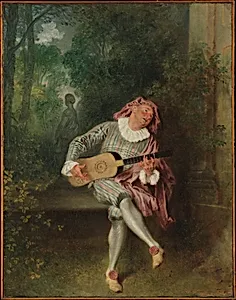
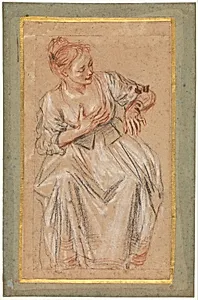
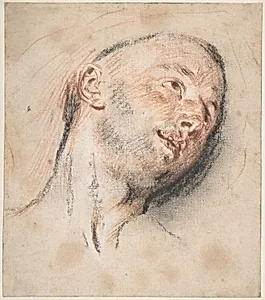
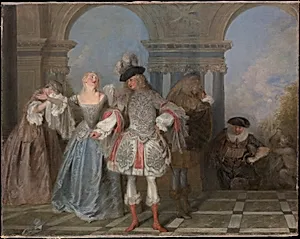
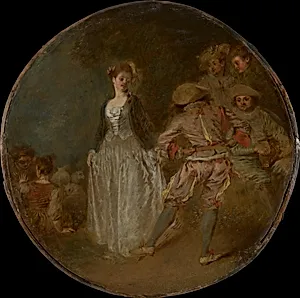
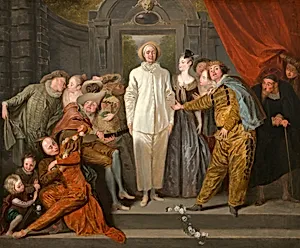
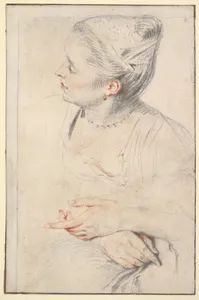
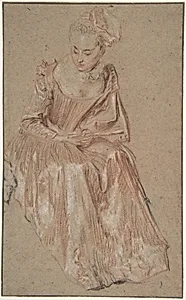
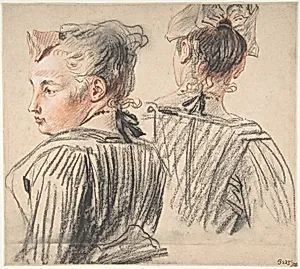
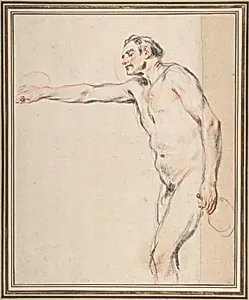
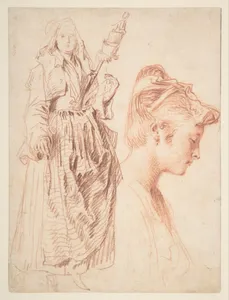
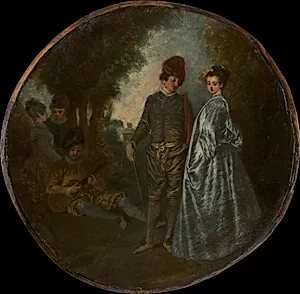
Watteau revolutionized French painting by inventing the *fêtes galantes* genre—elegant, dreamlike gatherings of aristocrats and performers in lush, ambiguous landscapes—earning official recognition from the Académie Royale in 1712 and full membership in 1717 with his masterpiece *Pilgrimage to Cythera* (1717, Louvre). Working in the Rococo tradition, his works blend Rubens's coloristic exuberance, Venetian lyricism, and commedia dell'arte whimsy, as seen in *Pierrot* (c. 1718–1719, Louvre), *Mezzetin* (c. 1718–1720), *The French Comedians* (c. 1720), and *The Italian Comedians* (1720). His *trois crayons* drawing technique captured fleeting gestures with exquisite subtlety, while paintings evoked wistful reverie amid opulent reverie.
In his final years, plagued by tuberculosis, Watteau painted the poignant shop sign *L'Enseigne de Gersaint* (1720–1721, Charlottenburg Palace) for dealer-friend Edme-François Gersaint before dying at 37 in Nogent-sur-Marne. His legacy endures as the progenitor of Rococo, profoundly influencing François Boucher, Jean-Honoré Fragonard, and even precursors to Impressionism through atmospheric landscapes; thousands of drawings, disseminated via engravings by Jean de Jullienne, permeated European decorative arts, fashion, and beyond. Watteau's elusive elegance continues to enchant, transforming everyday gallantry into timeless poetry.