Ctrl K
1889–1968
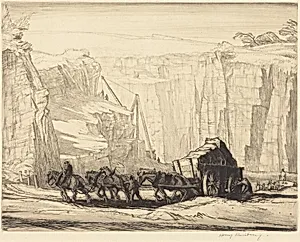
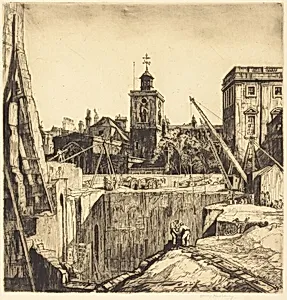
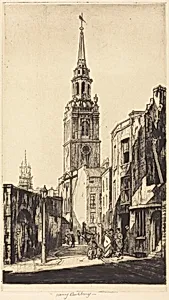
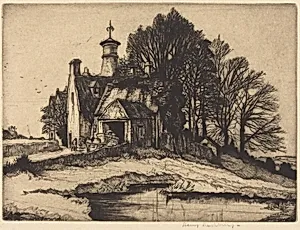
Henry Rushbury was a British artist celebrated primarily for his etchings and watercolors of architectural subjects, working during the early and middle decades of the twentieth century. He studied at the Birmingham School of Art before moving to London, where he became part of a generation of printmakers who revitalized the etching medium in Britain during the years surrounding the First World War. His association with figures in the British etching revival shaped his commitment to the traditional techniques of intaglio printing, which he practiced with notable refinement throughout his career.
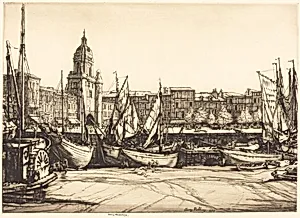
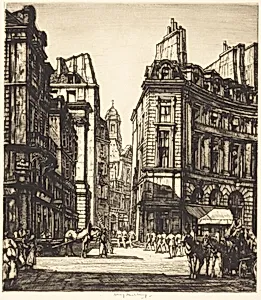
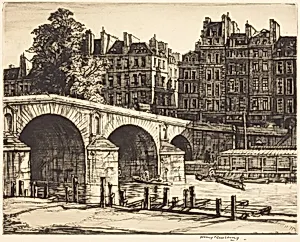
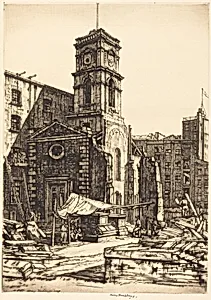
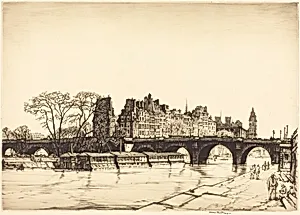
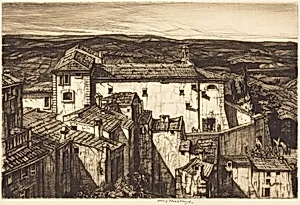
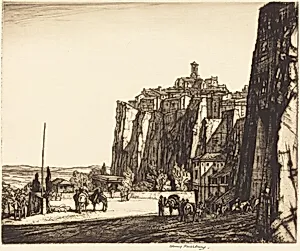
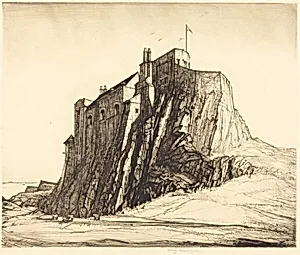
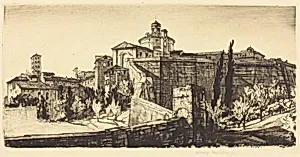
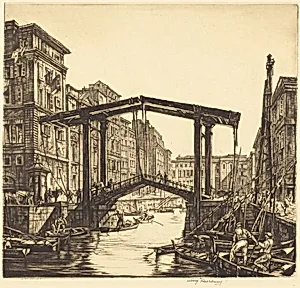
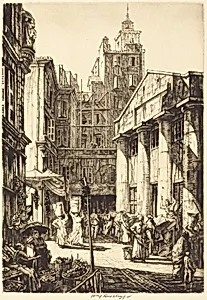
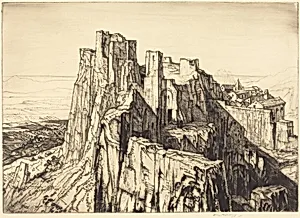
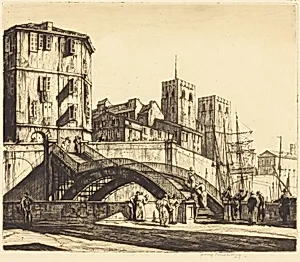
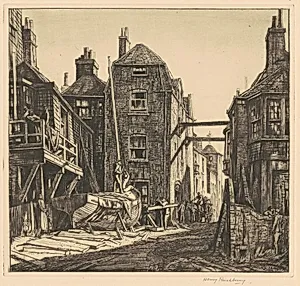
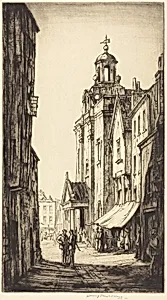
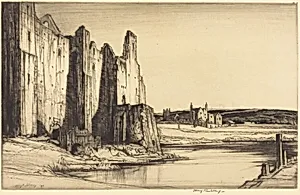
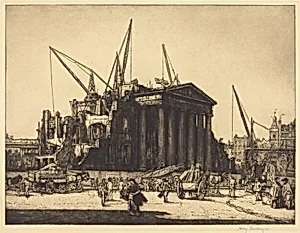
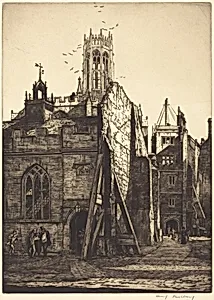
Rushbury's characteristic subjects were the buildings, harbors, and streets of Britain and the European continent — the weathered stone of ancient churches, the rigging of boats in Italian ports, the sun-bleached facades of Mediterranean towns. He approached architecture not as a draughtsman producing measured records but as an artist alive to the picturesque qualities of age and use: the way light falls across rough masonry, the texture of accumulated time on old surfaces. His etchings combine precise draughtsmanship with a sensitivity to atmosphere that gives his architectural subjects a quality of lived presence.
Elected a Royal Academician in 1936, Rushbury held a respected place in the British art establishment and exhibited regularly at the Royal Academy. He also served as Keeper of the Royal Academy from 1949 to 1964, a position that placed him at the center of institutional art life in Britain for a significant period. During this time he continued to draw and etch, his practice undiminished by his administrative responsibilities.
Rushbury's legacy rests on his contribution to the tradition of architectural etching in Britain, a tradition with roots in the work of Samuel Prout and James McNeill Whistler. His prints are valued for their technical accomplishment and their ability to evoke the character of specific places with economy and grace. Though the taste for etching declined in the later twentieth century, his work endures as a distinguished example of the medium's expressive possibilities.